Springs · Toronto
Garage Door Hinge Replacement in Toronto
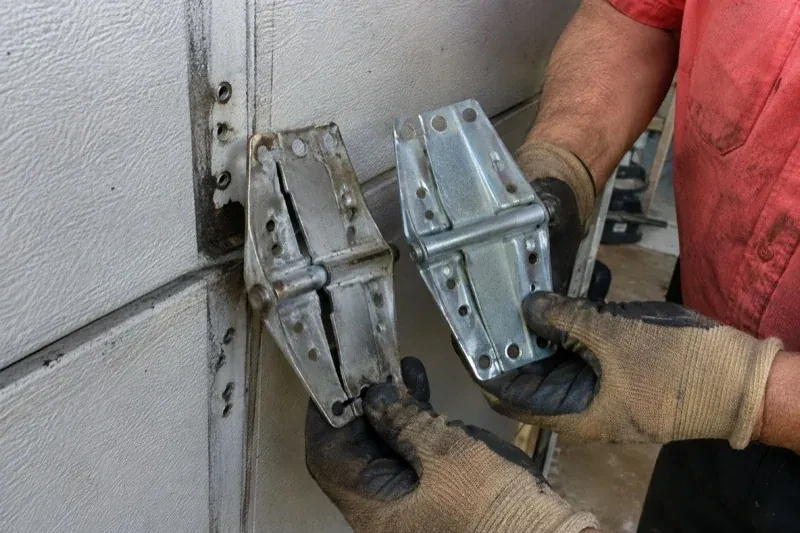
On the old wood door, one hinge has pulled away from the panel, dragging a screw and a chunk of soft timber with it.
In plain words
The hinge is only as good as what it is screwed to. On a steel door the screws bite into the stile, a folded steel channel at the panel edge, sometimes with a support plate behind it; on a wood door they thread into timber. Years of vibration back screws out, and once a hole is stripped the hinge rocks and the joint loosens. Hinge replacement includes fresh fasteners, and where holes have opened up the technician shifts to sound metal, steps up to a larger self-drilling screw, or bolts through the panel with a nut and washer or a backer plate. The new hinge then stays put.
How the visit goesEvery time the door goes up there is a sharp pop from the same spot, about a metre off the floor, and the whole door gives a little shudder. Come back down and it happens again at exactly the same place.
Garage Door Hinge Replacement
How the visit goes
Every joint, not just the loud one
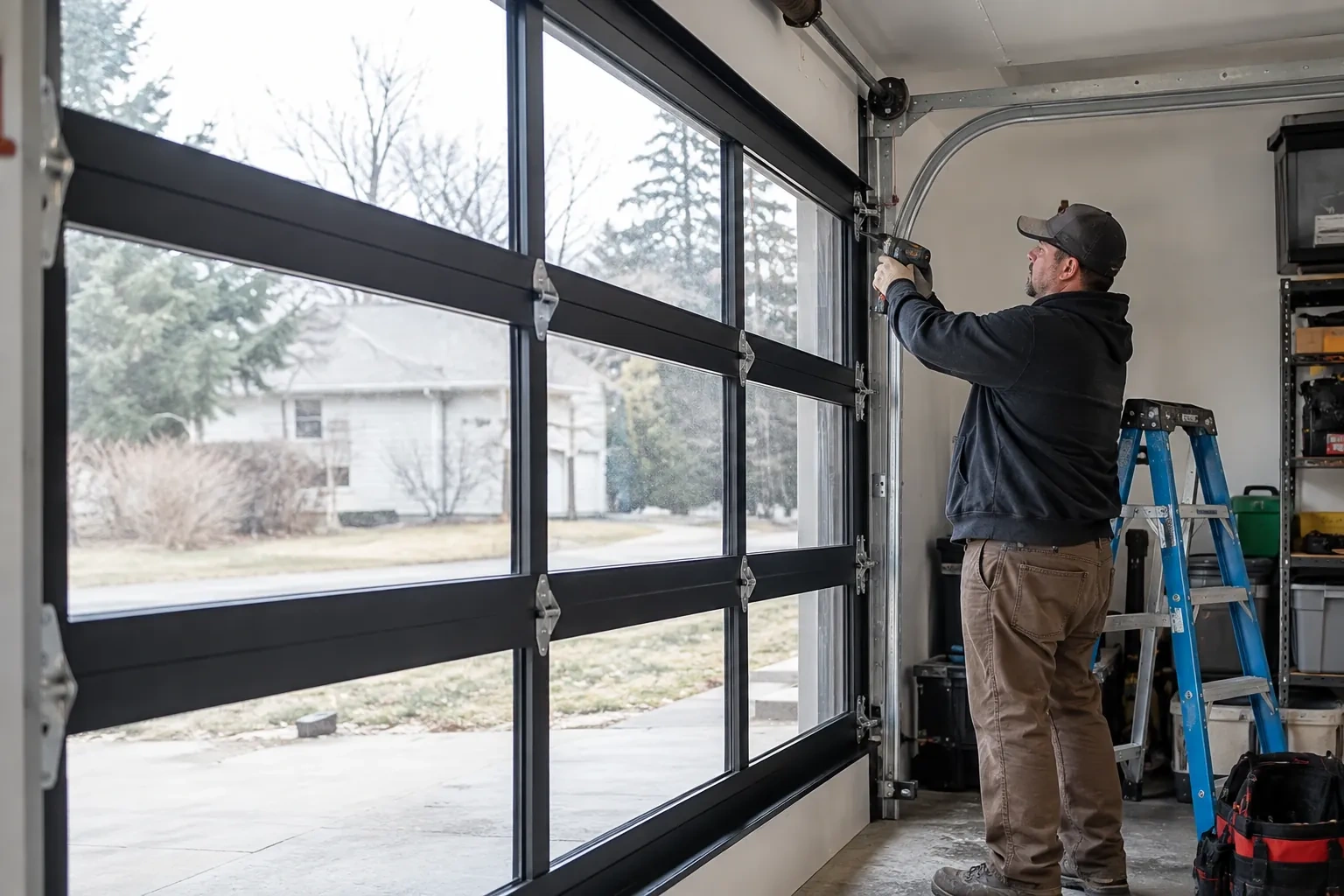
A hinge that has cracked usually has siblings on the way. The technician walks each joint with a flashlight, from the bottom up, looking at every edge hinge and every centre hinge: cracks spreading from a screw hole, a pin hole worn oval so the barrel rocks, a leaf bent away from the panel, rust bloom where the knuckle meets the pin, and screws that have backed out. Both ends of the door are compared, since hinges on the side nearest the driveway or a damp wall often age sooner. The result is a list of what needs changing now and what can wait, so you decide with the whole picture in front of you.
One hinge at a time, door closed
Hinges are changed singly, never a whole joint at once. With the door closed and the opener disconnected, the technician removes one worn hinge, fits its replacement and tightens it before moving to the next, so at every moment the joint is held by its other hinges and the panels stay aligned. Centre hinges go first when several are due, then the edge hinges. Each new hinge is set square to the joint line and snug to both panels before the screws are driven home, and the panels are checked for a flush face afterwards. This steady rhythm is what makes hinge work routine rather than eventful.
The balance test you can do yourself
You can confirm the door is balanced without touching a spring. With the door closed, pull the opener's release cord, lift the door by its handle to about waist height and let go gently. It should stay roughly where it is. A door that sinks or climbs on its own is telling you the springs are out of step with the door's weight, and a door dragged by the opener is what wears hinges early, so book an adjustment. Reconnect the opener the way its manual describes, usually by running it once. Doing this each season keeps both the hinges and the opener working lightly.
Garage Door Hinge Replacement
In the van
Track clamps or locking pliers
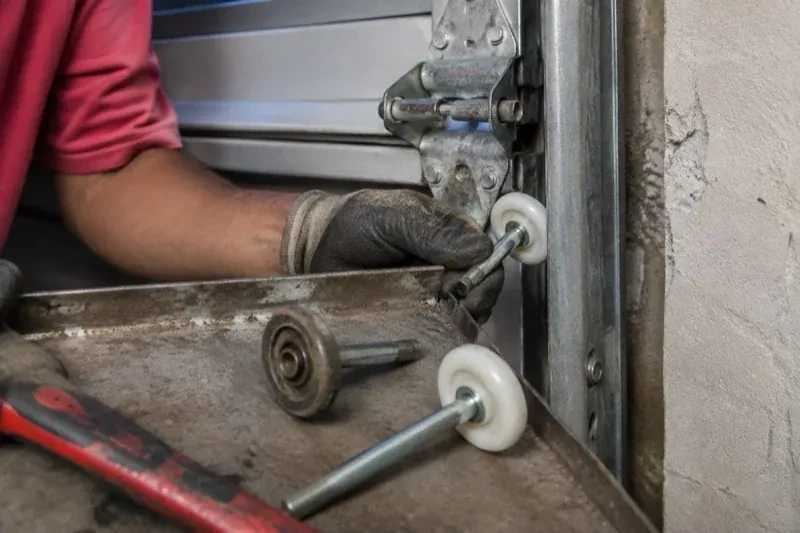
Replacement rollers
Heavy-gauge hinges for heavy doors
Numbered galvanized edge hinges
Flashlight and level
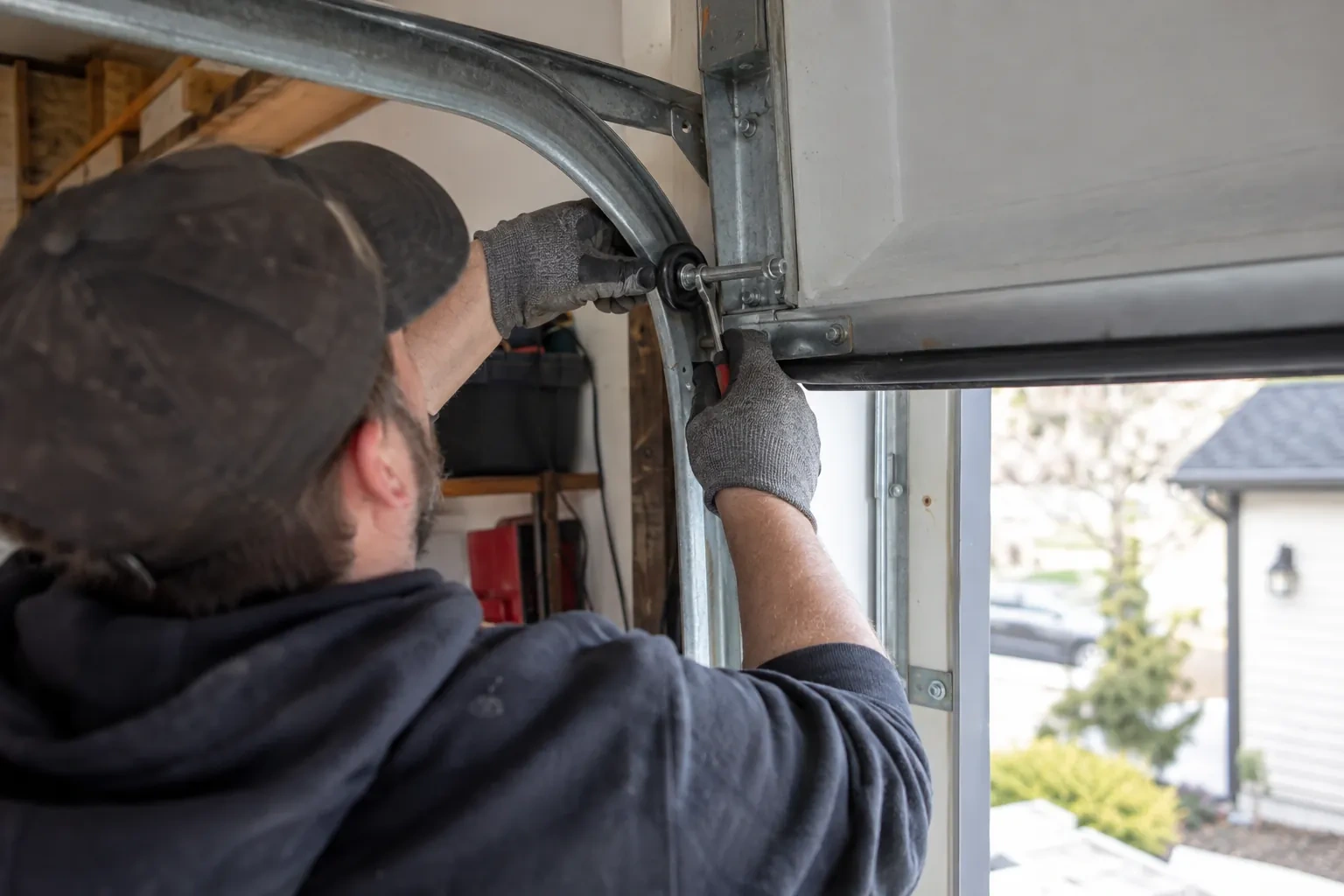
Garage Door Hinge Replacement
What affects the quote
Manufacturer-specific hinge patterns
Hinge width and hole spacing differ between door makers. A door that needs a maker-specific hinge rather than a standard one may involve ordering, which the quote notes.
Corrosion and seized fasteners
Screws rusted solid take time to drill out, and heavily corroded hinges on the lower joints are replaced rather than reused, which shows in the parts list.
Door width and panel count
A tall or double door has more joints and more hinges per joint, so a full-door hinge refresh on a double is a bigger job than the same work on a single.
What to have ready
- Where does the pop, click or gap appear, and roughly how high up?
- Is the loose or broken hinge at the edge of the door or in the middle?
- Can you read a number stamped on the hinges near the edge?
Garage Door Hinge Replacement: questions
QuestionsWhat information helps when I book the visit?
Whether the door is closed, open or stuck; where the noise or the gap appears and roughly how high; whether you can see a cracked, bent or loose hinge and whether it is at the edge or the middle; whether the door is a single or a double, steel or wood, and how many panels it has; and whether anything hit the door lately. A photo of the hinge and its stamped number is useful.
Will new hinges make the door quieter?
Often noticeably. A cracked or loose hinge is the source of many pops, clicks and rattles, and a hinge that holds its roller square lets the wheel run flat instead of scraping the track lip. Combined with fresh lubricant on the knuckles and rollers, the door settles into a steady rumble. Any noise that remains usually points to the rollers, the opener chain or the springs, which the technician can identify for you.
The screws spin in their holes. Can the hinge still be fitted securely?
Yes. A stripped hole is common on older steel doors and on wood doors where the timber has softened. The technician either shifts the hinge to fresh metal within the stile, uses a larger self-drilling screw that cuts new threads, or drills through and fits a bolt with a nut and washer or a backer plate on the inside. Any of these gives the new hinge a firmer anchor than the original screws had.
Related services
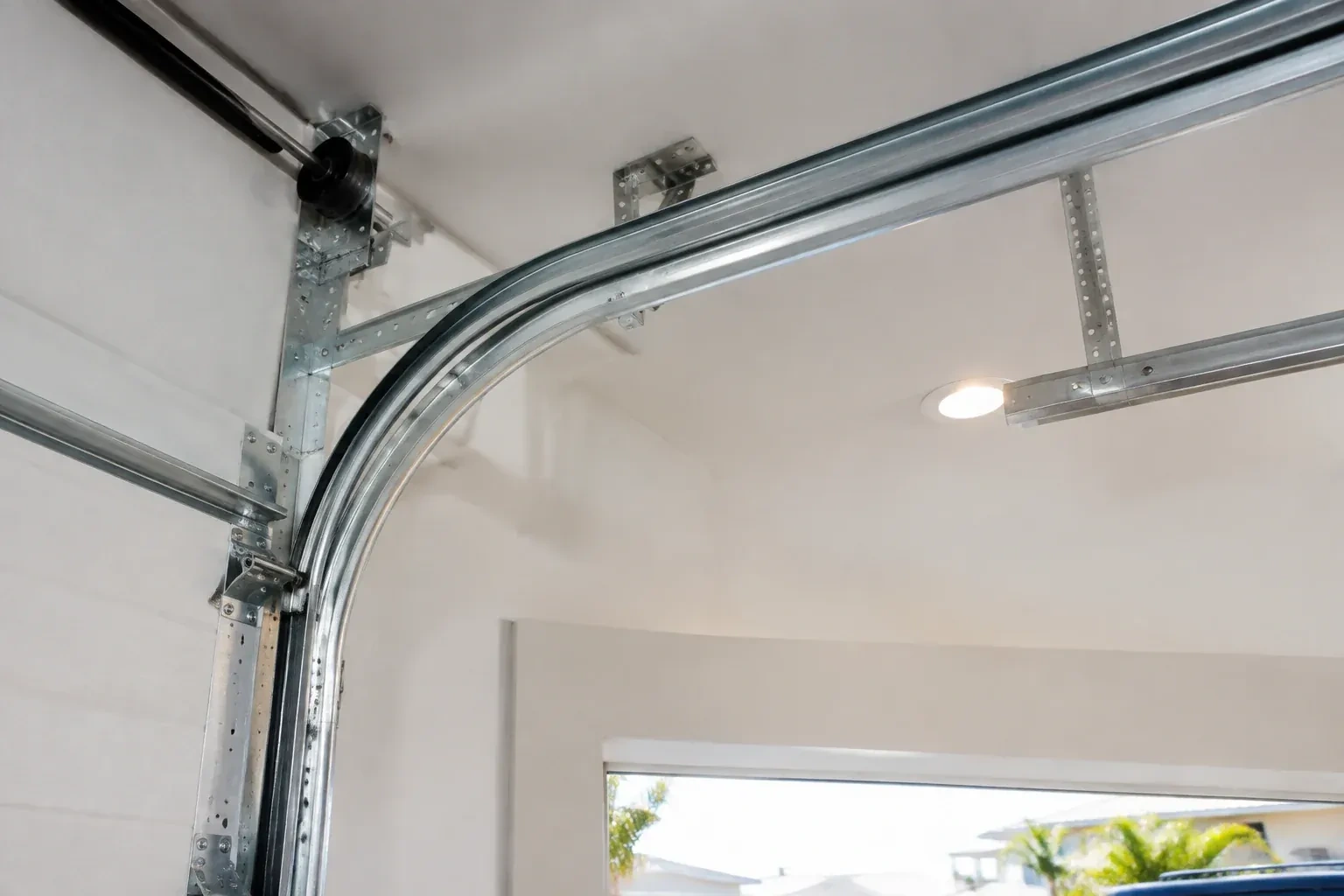
- Garage Door Track Repair or ReplacementAfter a decade of slushy winters the bottom foot of the track is flaking rust.
- Garage Door Cable ReplacementThe cable has wrapped itself around the shaft above the door instead of sitting on its drum.
- Torsion Spring ReplacementOn a cold morning the remote does nothing useful: the light comes on, the motor turns briefly, the door stays shut.