Springs · Toronto
Garage Door Track Repair or Replacement
After a decade of slushy winters the bottom foot of the track is flaking rust.
In plain words
What you get back is a door that runs its full height without a catch, hesitation or bang, with every roller seated in its channel and both sides rising together. The track sits plumb and firm on the jambs, the horizontal runs hold level from solid hangers, and the door seals along the stop when closed. Because the track was set to the door and the springs re-tensioned to it, the door balances by hand and the opener works lightly. You also leave with a note of the track profile, radius and lift type, which makes any later part a simple match.
How the visit goesThe door climbs crooked, one side clearly ahead of the other. Nothing looks broken, but the two tracks sit different distances from the door, and one leans in toward the opening near the top.
Garage Door Track Repair or Replacement
How the visit goes
The horizontal run and its hangers
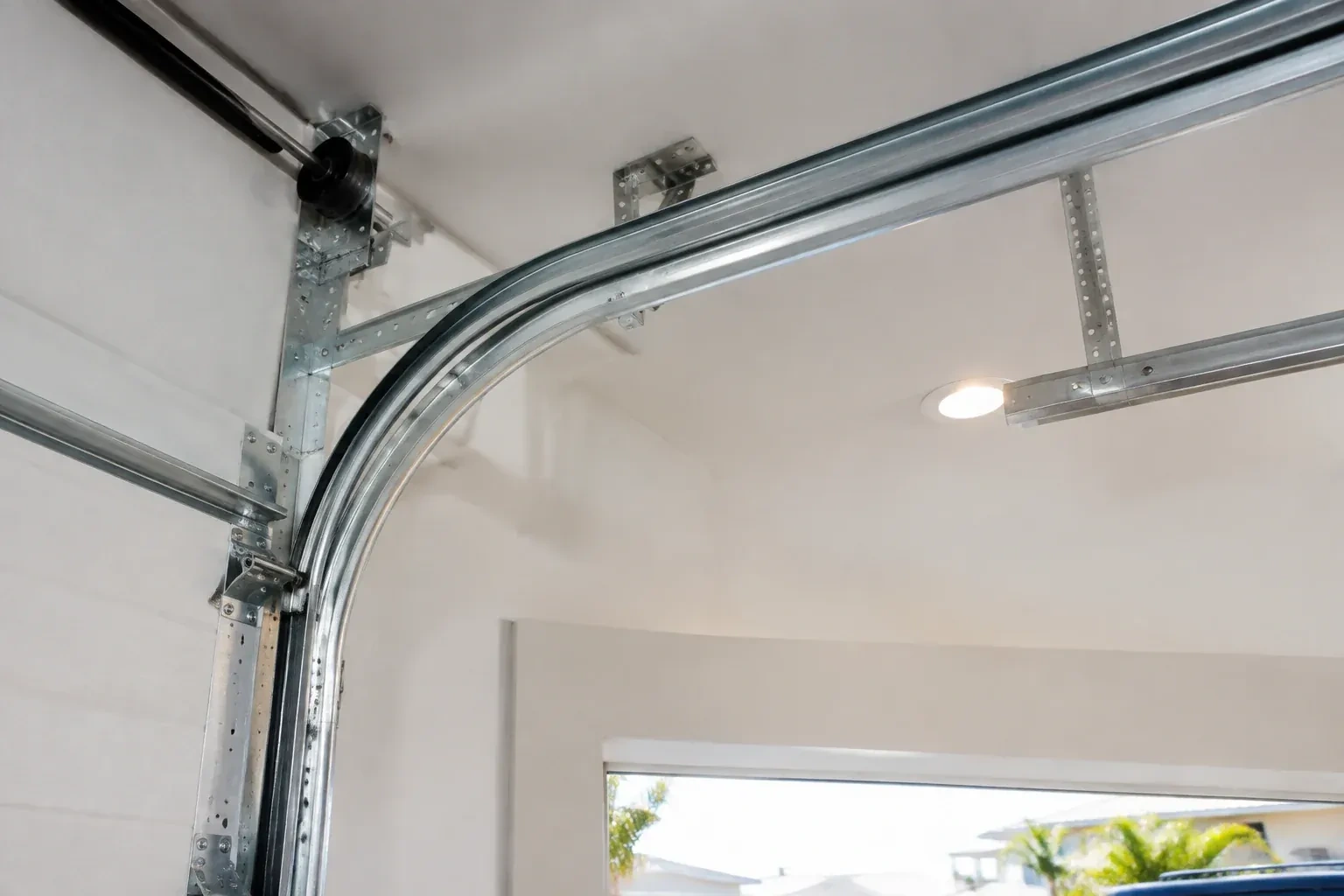
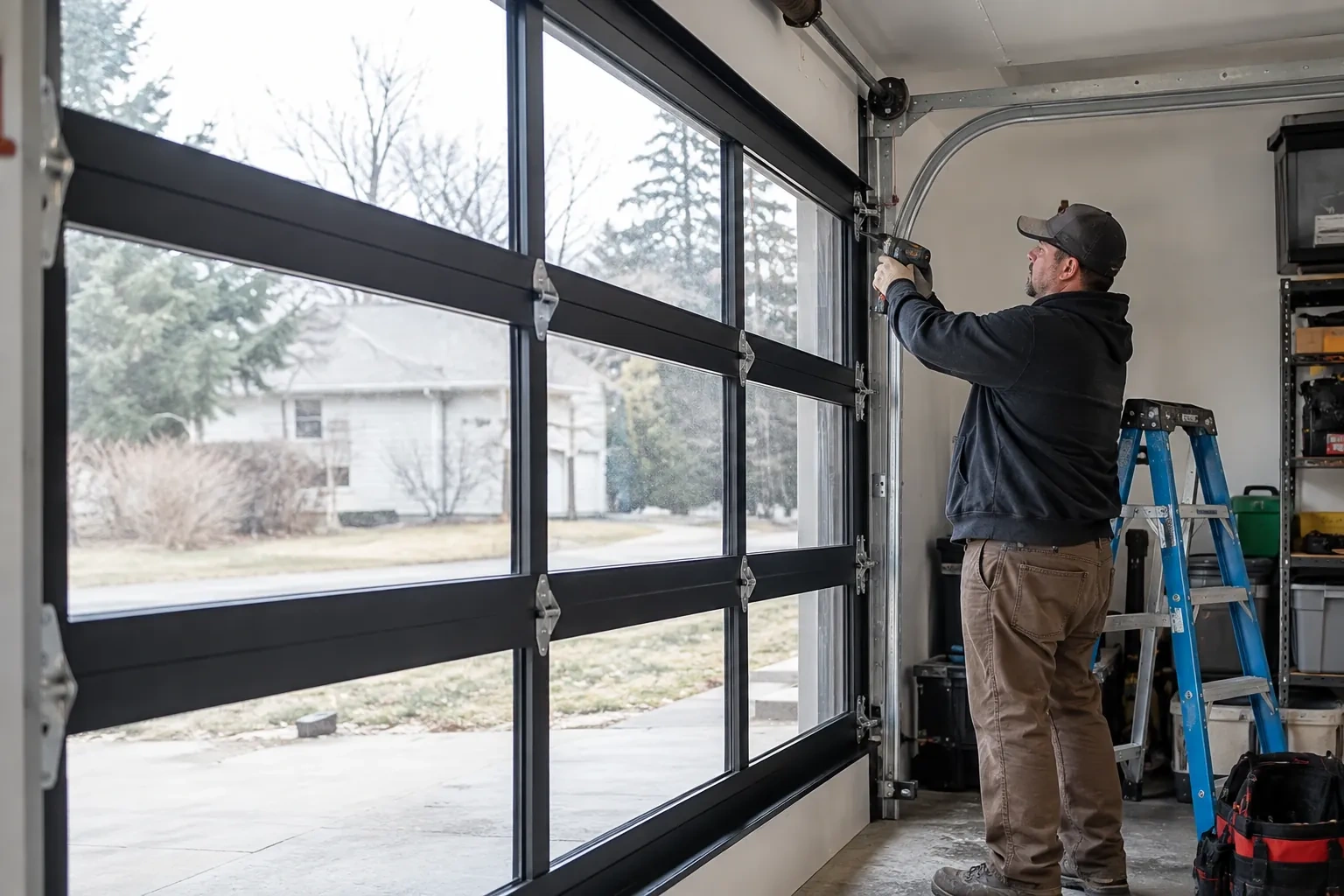
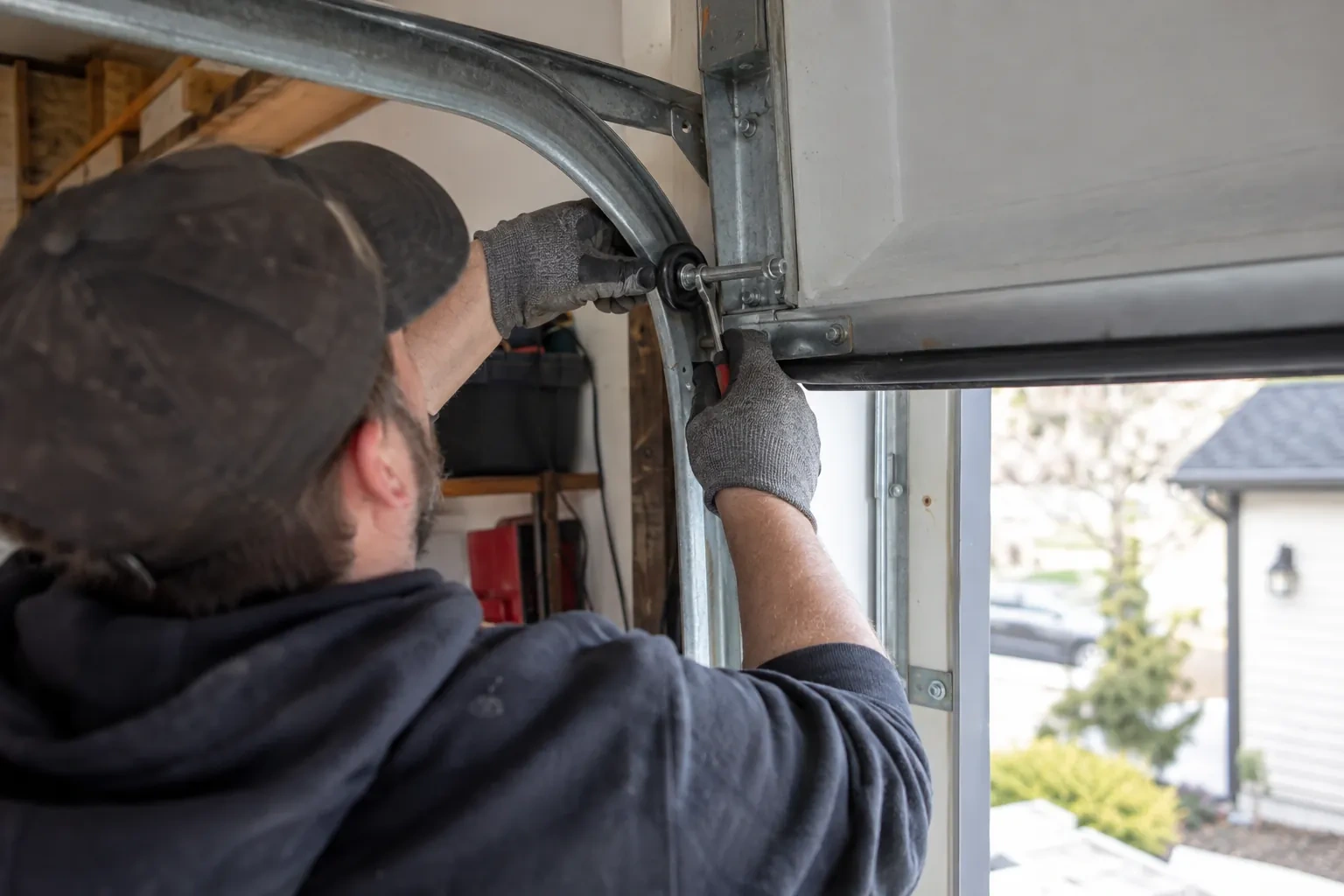
Overhead, the horizontal tracks should be level with each other, or set to the same pitch, held from the ceiling by back hangs of perforated angle screwed into joists. The technician sights along each run for sag, twist or a spread channel, checks the stiffening angle riveted to the track is intact, and puts weight on each hanger to check for flex. A run that droops at the rear slopes the wrong way rather than level or its intended pitch; one knocked sideways by a ladder or stored goods twists the top section as it travels. A door drifting back toward the opening once raised points to balance instead. Any hanger anchored into drywall alone is flagged for a joist.
Closing a channel that has spread
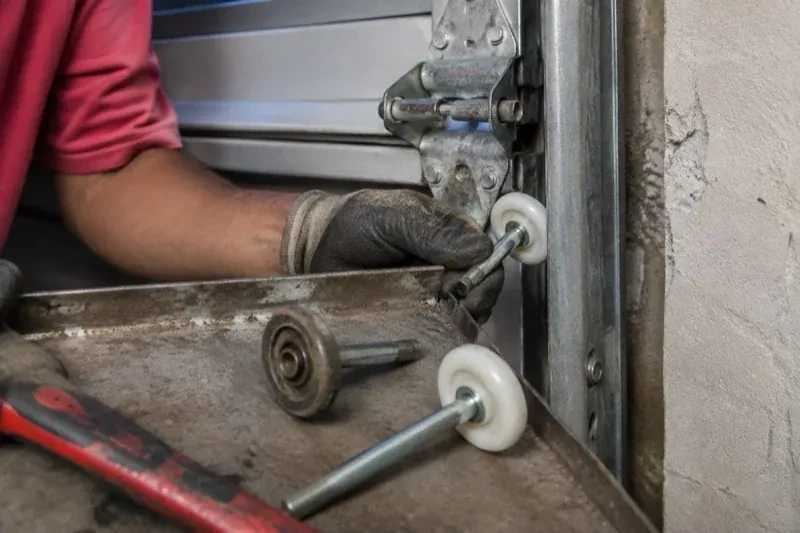
When worn rollers have pried the lip of the track open, the channel is squeezed back to its original width along the affected length. The technician measures the opening against an undamaged stretch, then closes it in stages with track pliers or a clamp and block, checking with a roller after each pass. The lip is dressed so no burr remains to nick the wheel. Because the spread came from rollers dragging on one edge, the wheels that did it are replaced in the same visit, otherwise the new profile opens again within a season. The corrected length is then re-fixed to its bracket so the shape holds.
Protecting the bottom of the track from salt and slush
The lowest foot of vertical track and the bracket beside it are where winter does its damage, so a little attention there pays off. Push slush away from the inside edge of the door rather than letting it pool against the track, and when a mild day comes, rinse or wipe the road salt off the bottom brackets and the channel. A dab of silicone spray on the jamb bracket fasteners in late autumn helps them shed meltwater. Keep the threshold clear of packed ice so the door meets the floor, not a ridge, and the opener never pulls against a stuck door. Those habits are what keep replacement track from meeting the fate of the last set.
Garage Door Track Repair or Replacement
In the van
Replacement rollers and hinges
Track pliers and dead-blow hammer
Top fixtures
Lag screws and track bolts
Vertical track, two-inch or three-inch
Garage Door Track Repair or Replacement
What affects the quote
Springs that have to be unloaded
Work at the flag bracket or on the curve means winding the torsion springs down and back up. That adds time, and the quote says whether it applies to your repair.
Ceiling hangers and what they are fixed to
A hanger that has bent or pulled from a joist is replaced, and a run that was only fixed into drywall gets angle reaching to solid framing. Each hanger corrected is named in the quote.
Condition of the jamb wood
Where the jamb is soft or split at the floor, sistering or replacing the lower length is carpentry added to the track work, and the lumber and fasteners are listed on their own line.
What to have ready
- Is the door closed, fully open, or stuck partway?
- Is there rust on the track or brackets near the floor?
- Do you have the door's manual or a label with its model?
Garage Door Track Repair or Replacement: questions
QuestionsWhy is there a gap between the track and the edge of the door?
That gap is intentional. The rollers sit on stems that reach out from the hinges, and the track stands a set distance from the door so the wheels ride in the channel without the door's edge touching the track. The gap should be equal on both sides and slightly larger at the top of the vertical run, which is the taper that lets the door seal at the stop and release on opening. Unequal gaps are a sign the track has moved.
How often should the track and its fasteners be checked?
A glance each month from inside the garage, with the door closed, is enough to catch a bracket standing off the jamb or a hanger starting to lean. Twice a year, snug the bracket bolts and lag screws, wipe out the channel, and watch the door make a full trip to confirm every roller stays in the track. The industry guidance also suggests an annual visit by a trained door technician, who checks the track with the rest of the system.
Why is the horizontal track sagging?
The horizontal run hangs from the ceiling on back hangs of perforated angle, and it sags when a hanger bends, its screws pull out of a joist, or it was only ever fixed into drywall. A sagging hanger droops that run out of level or its intended pitch. The fix is a straight or new hanger screwed into solid framing, with the run set to the manufacturer's specified pitch and matched to its partner; a door that drifts back toward the opening once raised is a separate, balance-related symptom.
Related services
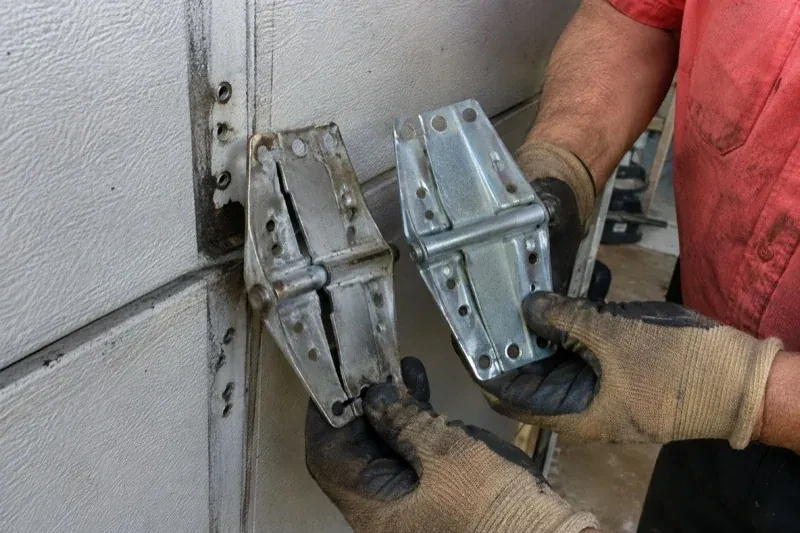
- Garage Door Hinge ReplacementOn the old wood door, one hinge has pulled away from the panel, dragging a screw and a chunk of soft timber with it.
- Garage Door Cable ReplacementThe cable has wrapped itself around the shaft above the door instead of sitting on its drum.
- Torsion Spring ReplacementOn a cold morning the remote does nothing useful: the light comes on, the motor turns briefly, the door stays shut.