Repairs · Toronto
Off-Track Garage Door Reset
A delivery van backed into the shop's overhead door this afternoon.
In plain words
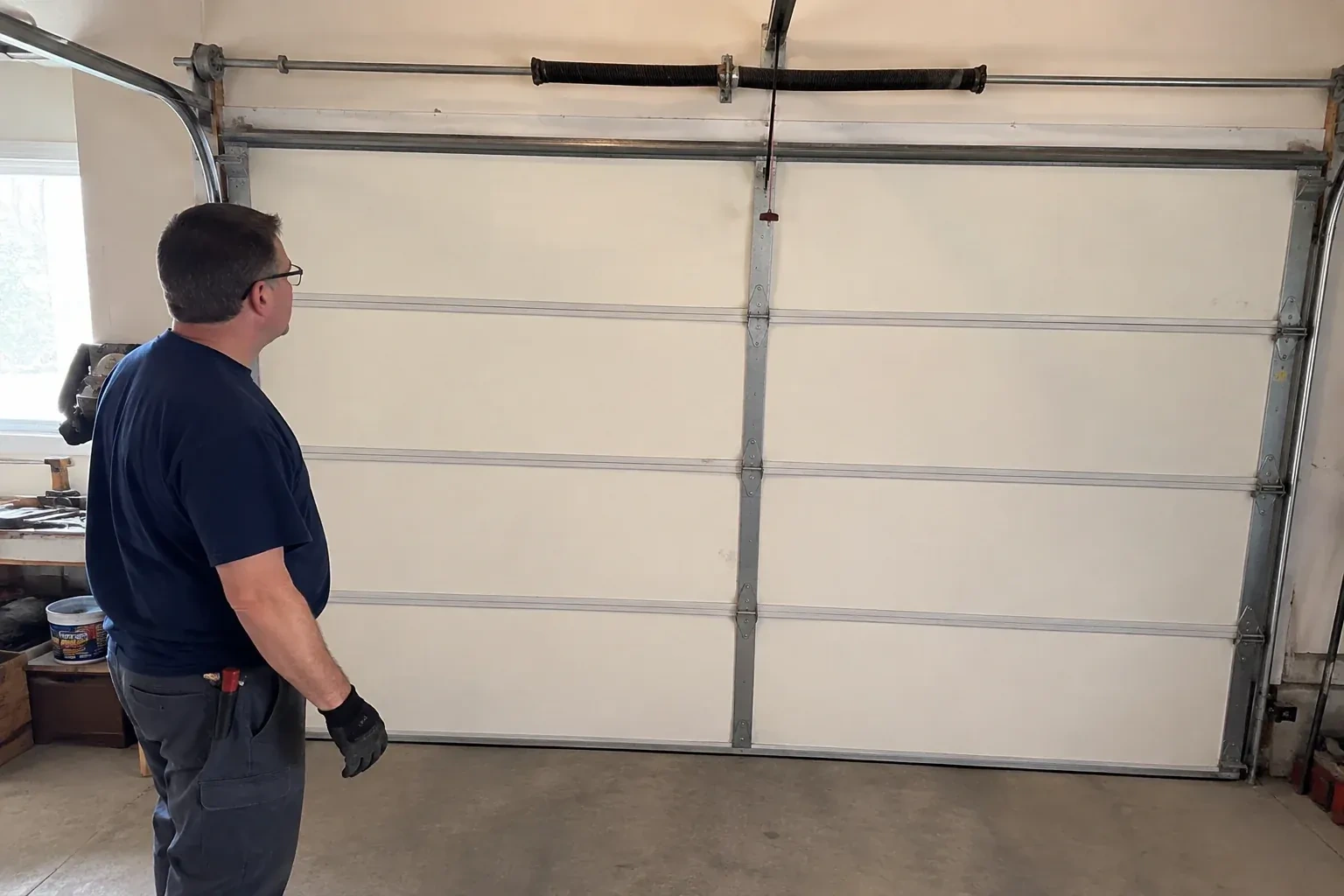
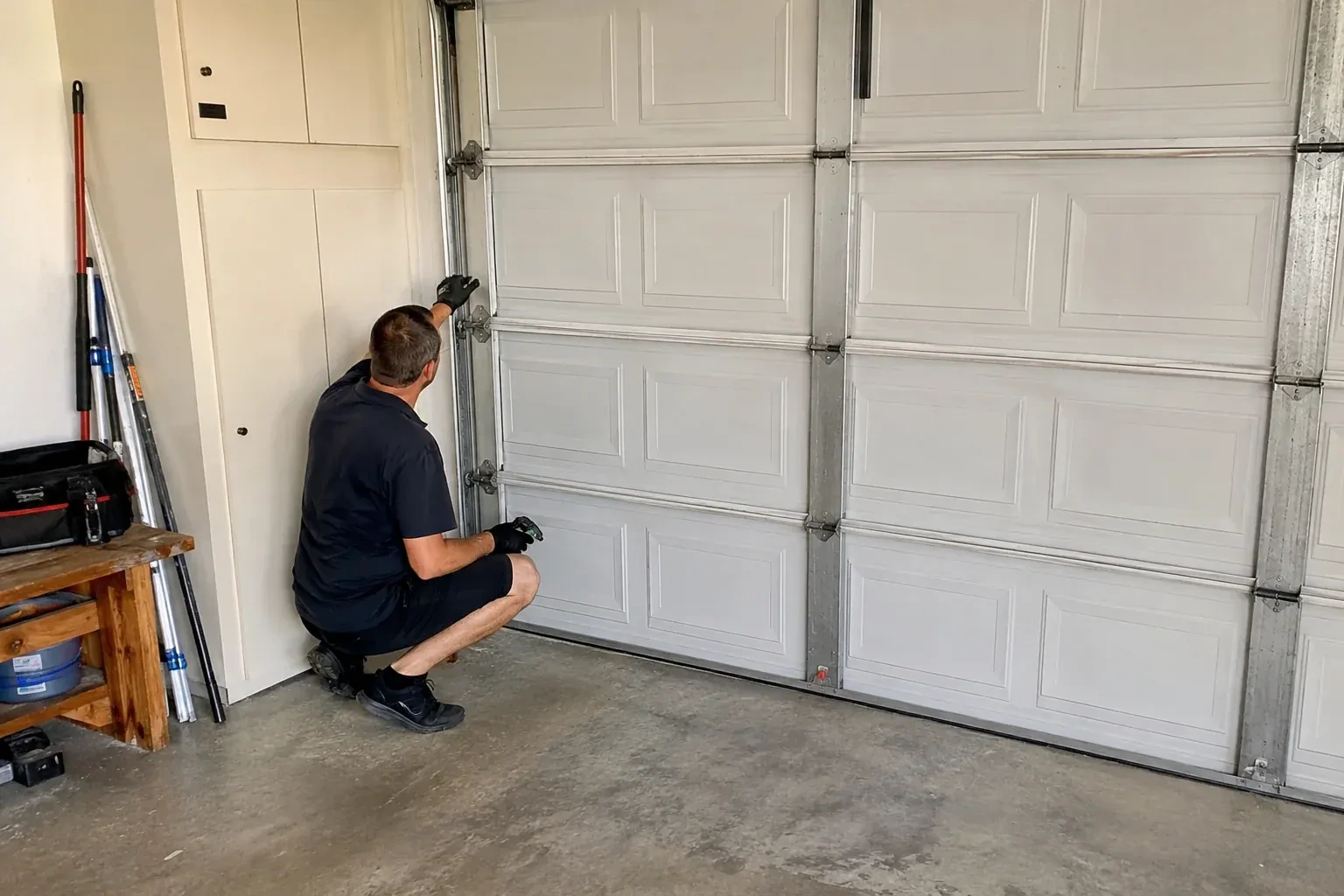
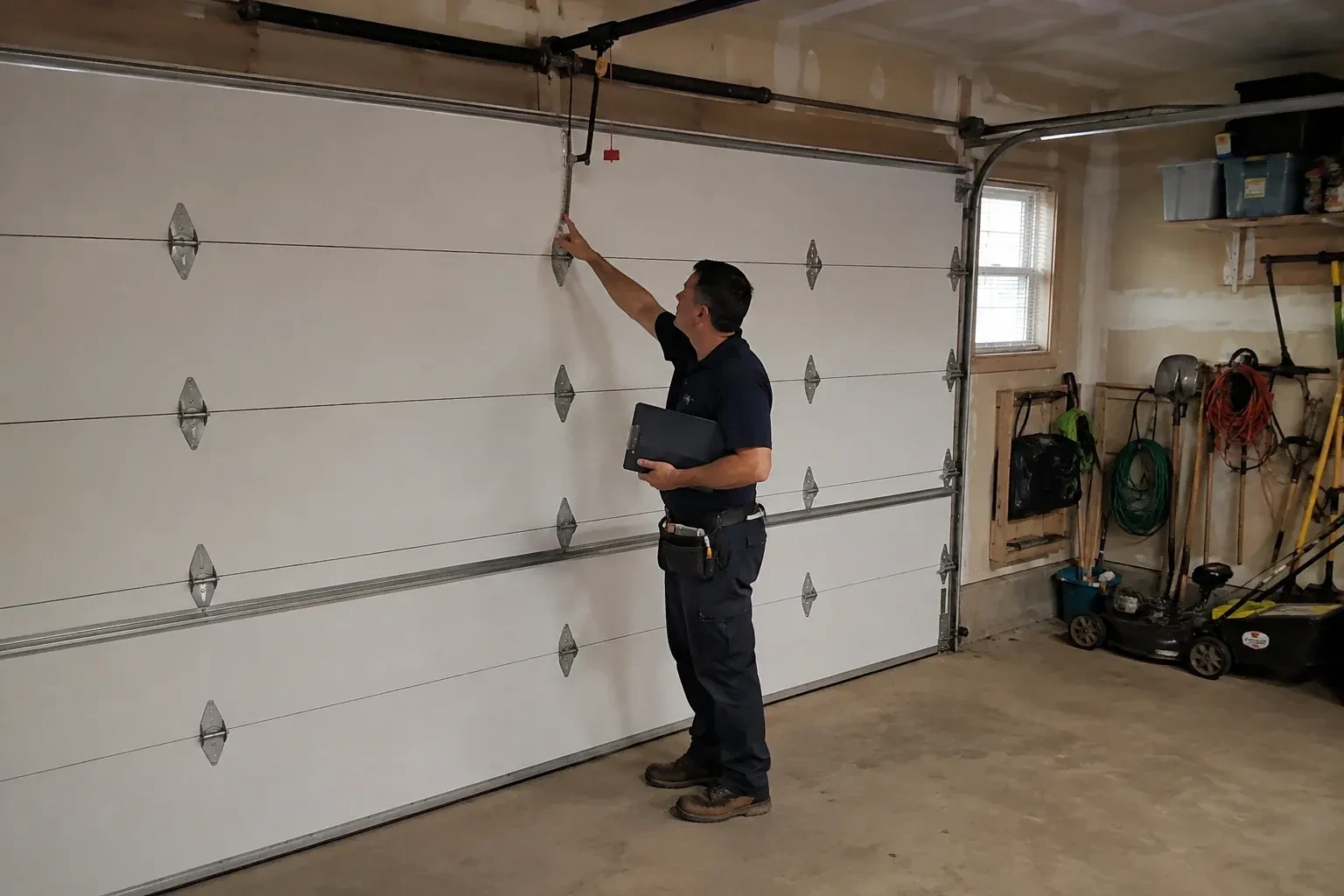
An off-track reset is the visit that puts a crooked, jammed or hanging garage door back onto its rails. Sectional doors ride on rollers inside a pair of curved steel tracks, and when a roller escapes, the door racks sideways and jams. The technician first makes the door safe by disconnecting the opener and clamping the sections so nothing can slide, then works out what let the roller go. The rollers are guided back into the track, any cable that jumped its drum is re-seated, the track is trued against the wall, and the door is run by hand and then by opener to confirm it travels straight.
How the visit goesA delivery van backed into the shop's overhead door this afternoon. The lower panel is pushed in, the track on that side is kinked, and the door is hanging unevenly with staff unable to close up for the night.
Off-Track Garage Door Reset
How the visit goes

Springs and balance, read before the reset
The counterbalance is what will carry the door once it is back on its rails, so its condition is assessed at the start. Torsion springs above the header are checked for a break in the coil, a gap between coils and a loose stationary cone; extension springs beside the horizontal track are checked for stretch and for the containment cable running through them. The technician also looks at whether the springs match the door's weight, because a door that was already heavy for its springs makes the opener drag the sections and is a common background cause of a roller working loose.
Guiding the rollers home
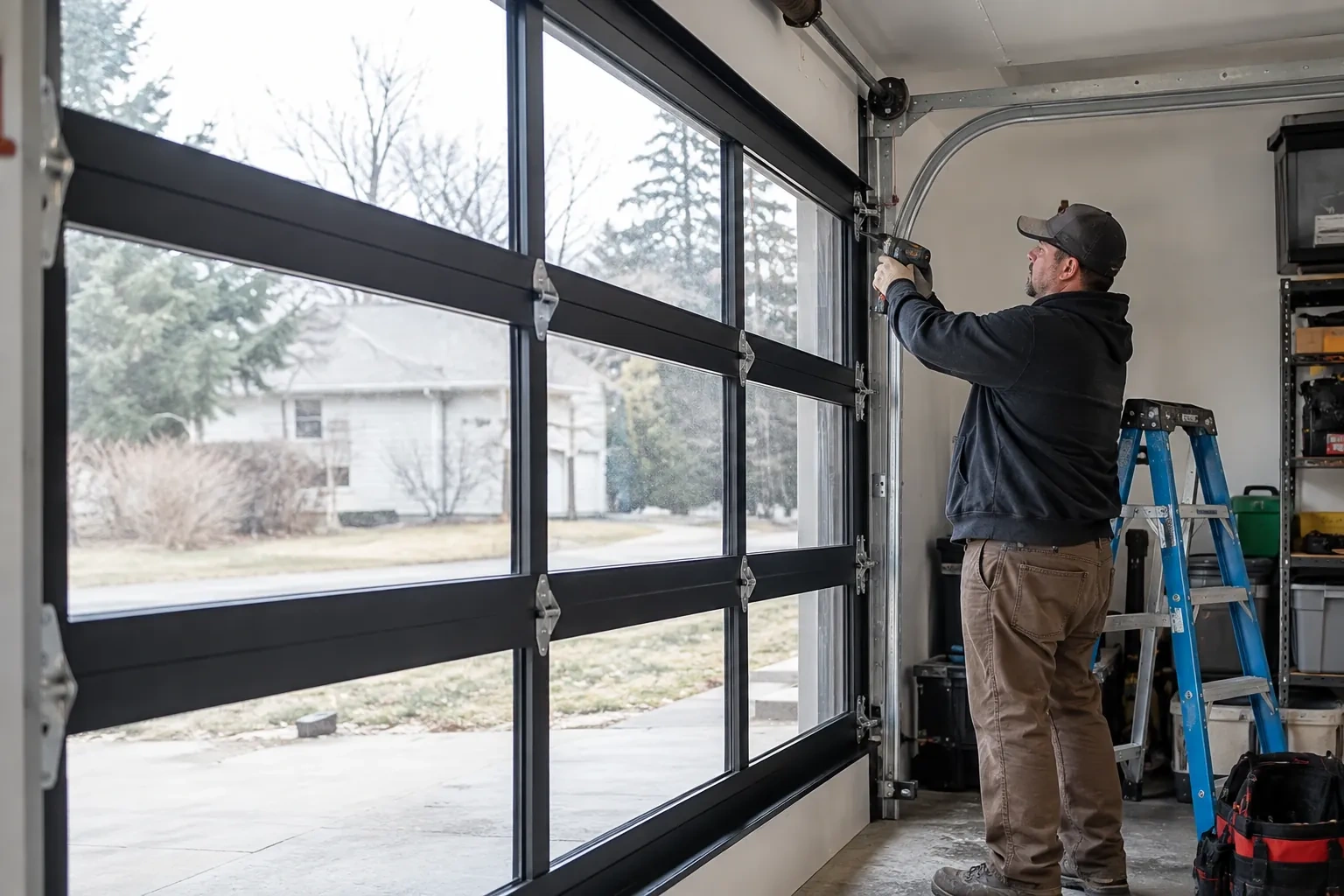
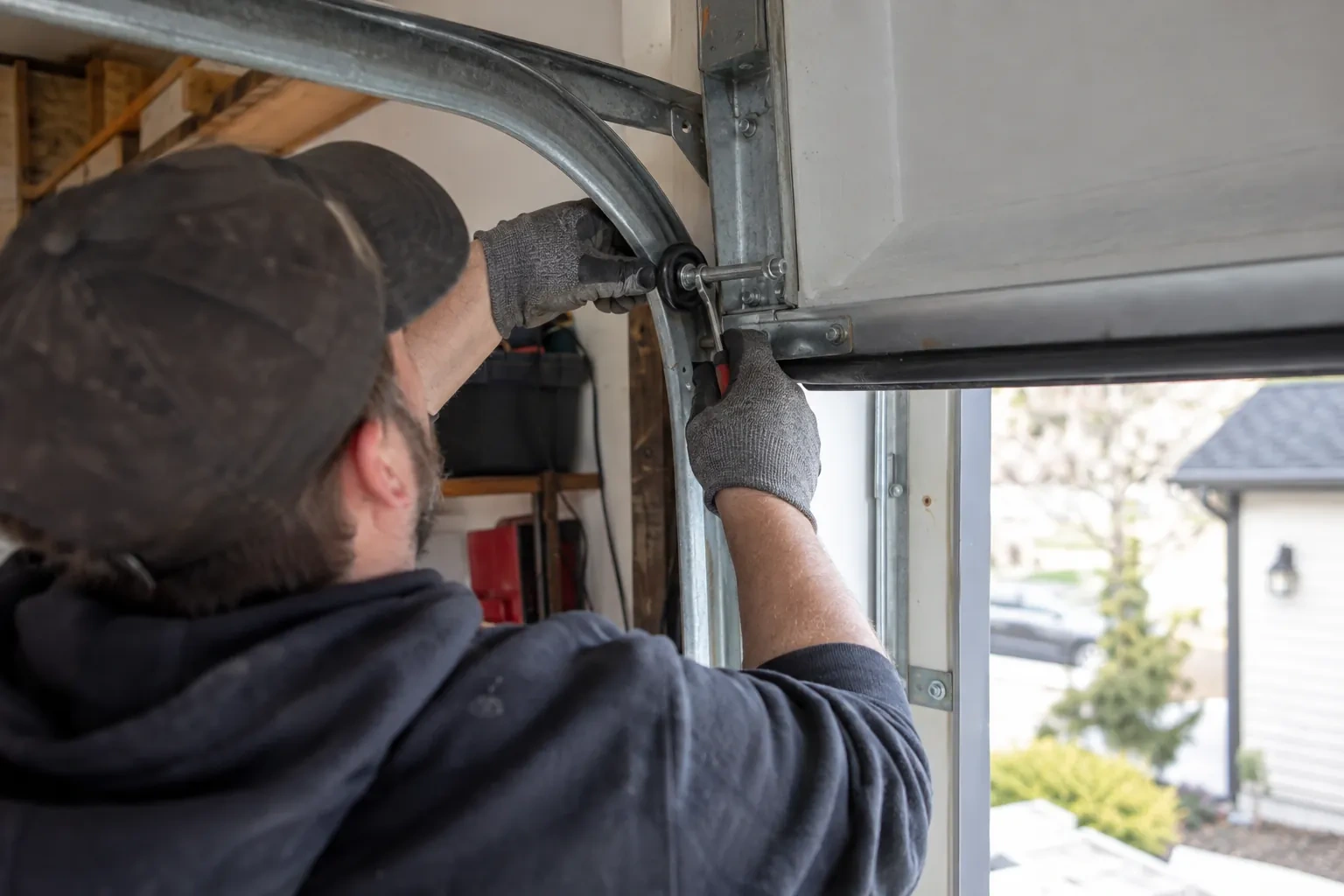
With the door supported, each escaped roller is returned to its rail. Where the track lip has spread, it is eased open just enough with track pliers to admit the roller and then squeezed back to its original profile so the wheel sits captive again. Where the track is sound, the section is lifted by its safe gripping points and the roller stem slid into the rail at the open end of the curve or through the vertical track from below. Rollers are seated one section at a time, from the bottom up, checking that each section sits flush against the next before the one above is handled.
Lubricating the right parts, and not the track
Twice a year, hinge pins, roller bearings and the coils of torsion springs get a light application of a garage-door silicone spray or white lithium grease, wiped so nothing drips. Nylon rollers without bearings are left dry. The tracks themselves are only ever wiped clean with a damp cloth: lubricant on the rail collects grit and lets the rollers skid rather than turn, which is a slow route back to a worn wheel and an escaped roller. Household penetrating oils are avoided because they attract dust. This small routine keeps the freshly reset door running as quietly as it does on the day of the visit.
Off-Track Garage Door Reset
In the van
Vertical or horizontal track section
Jamb and flag brackets
Long lag screws or through-bolts
Track pliers
Garage-door silicone lubricant
Off-Track Garage Door Reset
What affects the quote
Track that can be trued versus track that must go
Re-plumbing and tightening existing track is labour only. A crushed or kinked length that has to be cut out and replaced adds the new rail in the door's profile, and the quote says which applies.
Spring condition found during the check
If the springs are broken, badly worn or mismatched to the door, they are quoted as their own job. You choose whether to do that in the same visit, and the reset itself stands on its own.
Where the door was stuck
A door jammed part way up with the load shared unevenly between springs and cables takes more care to secure and lower than a door that is closed and merely crooked, and that time is part of the estimate.
What to have ready
- Is the door a single or a double, and is it steel, wood or insulated?
- Is one side of the door hanging lower than the other?
- Is the door fully open, part way up, or closed and sitting crooked?
Off-Track Garage Door Reset: questions
QuestionsWhy do rollers wear out, and how would I know?
Rollers turn thousands of times a year while carrying part of the door's weight, and their small ball bearings wear, fill with grit or fall out. Nylon tires can crack and steel wheels can wear flat spots or grind down to the stem. A worn roller squeals, wobbles in the rail or lets the door shudder at the curve. Replacing them as a set restores a quiet door and removes a common cause of a roller dropping out.
Are the springs involved in an off-track door?
Frequently, in one of two ways. Springs that are worn, broken or mismatched to the door's weight make the opener carry a load it was never meant to, dragging the sections out of line. And whenever cables must be re-seated or replaced, the spring tension has to be released and rewound to do it. The technician assesses the springs at the start and tells you whether they are part of the fix.
Will the track have to be replaced?
Often not. A track that is simply out of plumb, spread at the lip or loose on its brackets is re-formed and re-fixed. Replacement is for rail that has been crushed, kinked or torn by an impact, because a roller passing a tight spot will pop out again. The technician measures the damaged length against the door's roller size and tells you which case you have before any track is ordered or cut.
Related services
- Garage Door Tune-UpYou pulled the red cord to lift the door by hand during a power cut and it felt like lifting a car.
- Garage Door Panel ReplacementYou misjudged the last metre of the driveway and felt the bumper meet the door.
- Garage Door Bottom Seal ReplacementWith the door closed and the lights off, a bright line of daylight runs along the floor from one side to the other.