Openers · Toronto
Garage Door Opener Replacement
The bedroom above the garage shakes every morning at six when the chain drive fires up.
In plain words
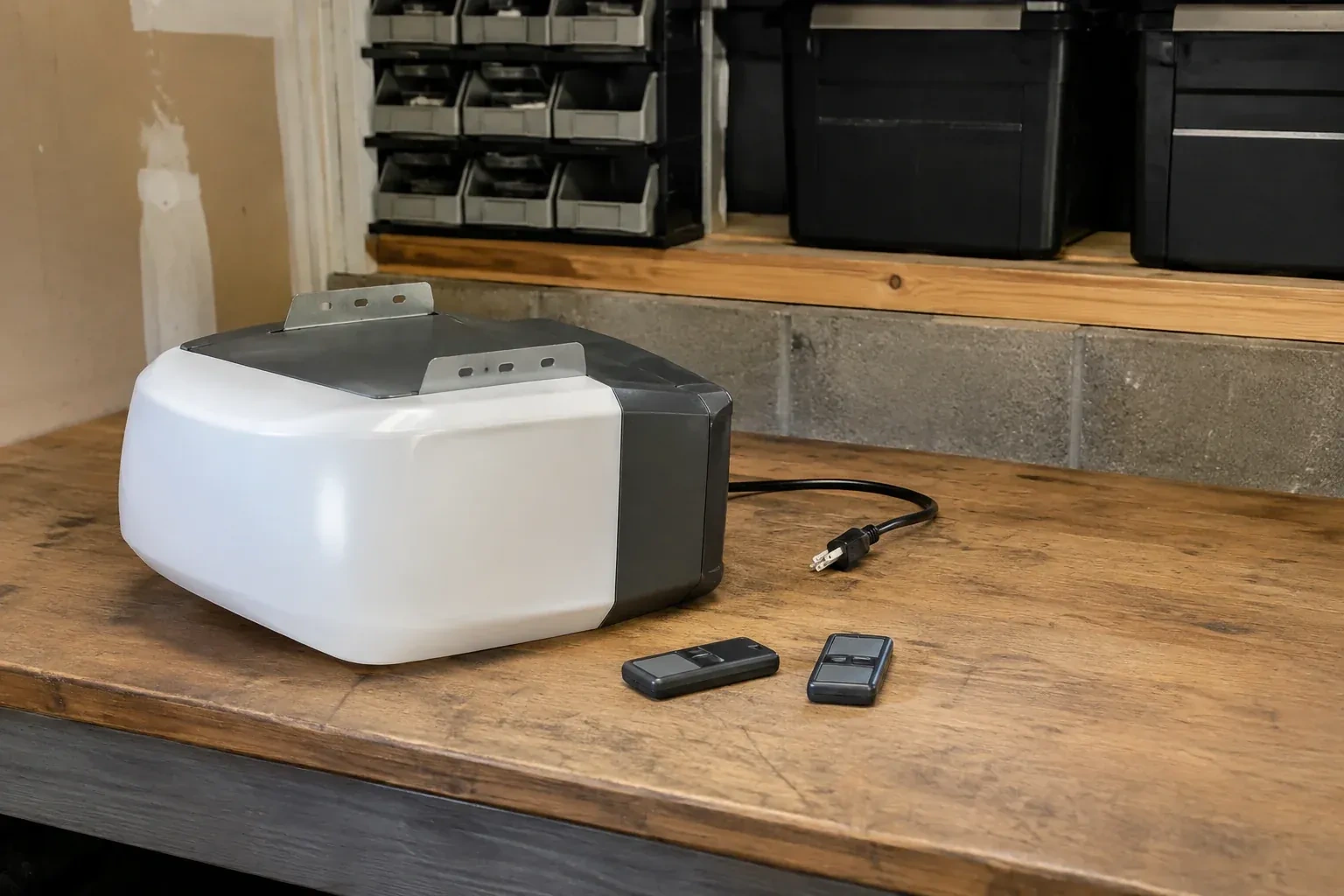
A replacement is also a chance to decide how you want to open the door. Most households leave with a couple of handheld remotes, a wireless keypad by the door for children coming home and a wall console with a light button. The in-car buttons built into many vehicles can be taught the new opener. Wi-Fi models let a phone open, close and check the door from anywhere, and some add a camera or a timer that closes the door if it is left open. Battery backup keeps everything running through a power cut. The technician sets each of these up and shows you how they work.
How the visit goesThe remotes only work from the end of the driveway now, and one of them disappeared with a set of keys last month. Inside the remote are tiny switches instead of a learn button, so excluding the missing one means resetting the switch pattern on every remote and the receiver.
Garage Door Opener Replacement
How the visit goes

Power at the ceiling
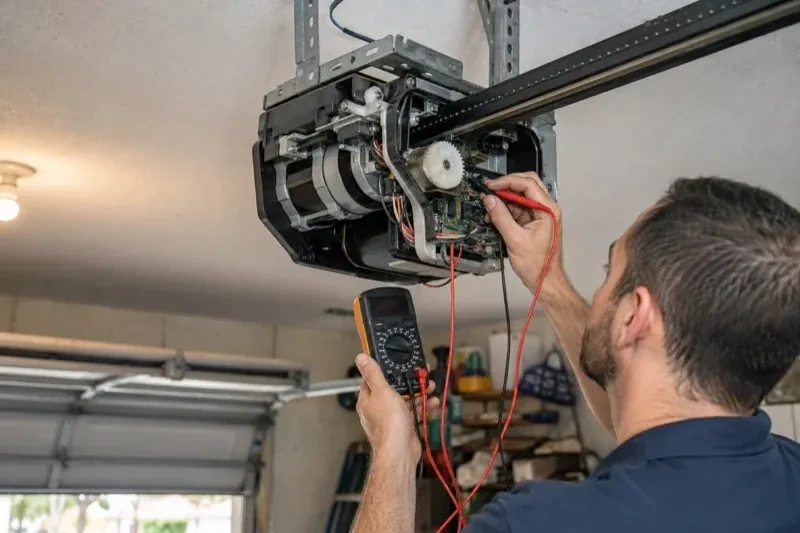
Every operator plugs into a grounded receptacle close to the head unit, so the technician looks for one and checks how it is fed. Many older garages have no ceiling receptacle at all and the old opener has been running from an extension cord draped across the joists, which is a habit worth ending with the new installation. If a receptacle needs adding or moving, that is a job for a qualified electrical contractor, ideally arranged before installation day. The technician also notes whether the garage has Wi-Fi reach if a connected opener is on the wish list.
Building and hanging the new rail
The rail sections are joined on the floor, the trolley is threaded on and the chain or belt is fitted and tensioned to the maker's setting before the assembly is bolted to the head. The header bracket is fastened with lag screws into solid framing centred above the door, high enough to clear the top section at the highest point of its travel. The head is then raised, hung from the ceiling joists with perforated angle iron cut to length, and adjusted until the rail runs level and in line with the door's centre. A rail that is true to the door keeps the trolley from binding and keeps the drive quiet for its whole life.
Keeping the door balanced under the new operator
The new operator will run for many years if the door it moves stays balanced. Once a season, pull the release with the door closed, lift it by hand to about a metre and let go: it should stay there. If it drops or creeps upward, the springs have drifted and want a tune before the operator starts working harder to compensate. Watch too for a door that pauses or jerks at one point in its travel, which is usually a roller or a track bracket rather than the motor. A yearly service visit that checks balance, cables, rollers and the safety tests keeps both the door and the operator in step with each other.
Garage Door Opener Replacement
In the van
Photo-eye sensors
Perforated angle iron hangers
Remotes and wireless keypad
Wall control console
Rail sections and trolley
Garage Door Opener Replacement
What affects the quote
Top-section reinforcement
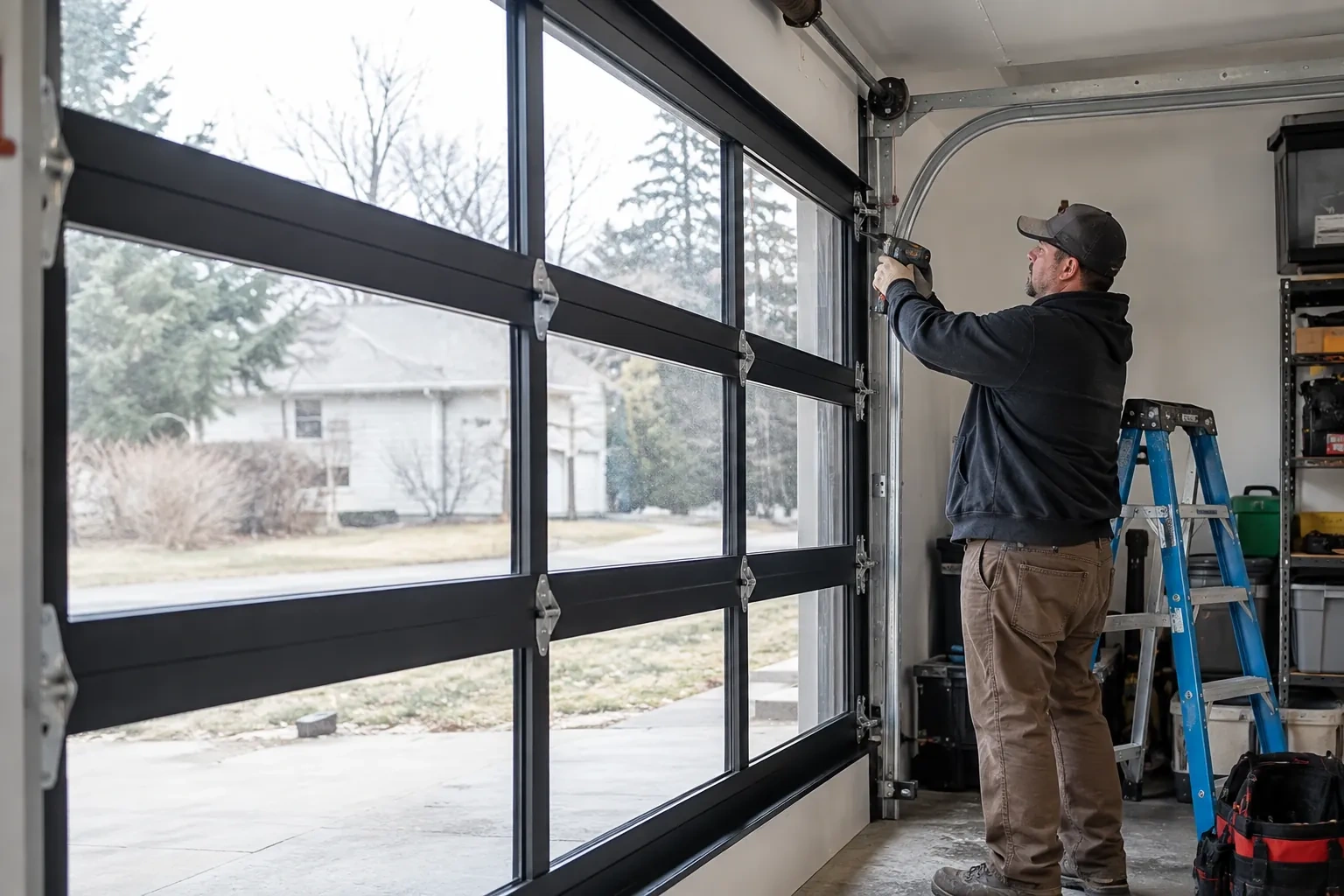
Lightweight steel, glazed and wide doors need a strut or operator bracket across the top section before the arm is attached, so the pull is spread across the door rather than concentrated at one point.
Wall-mount accessories
A wall-mount operator is installed with a cable tension monitor and a powered track lock, and sometimes a separate light kit, since the unit itself hangs no lamp over the garage.
Door work found during the balance check
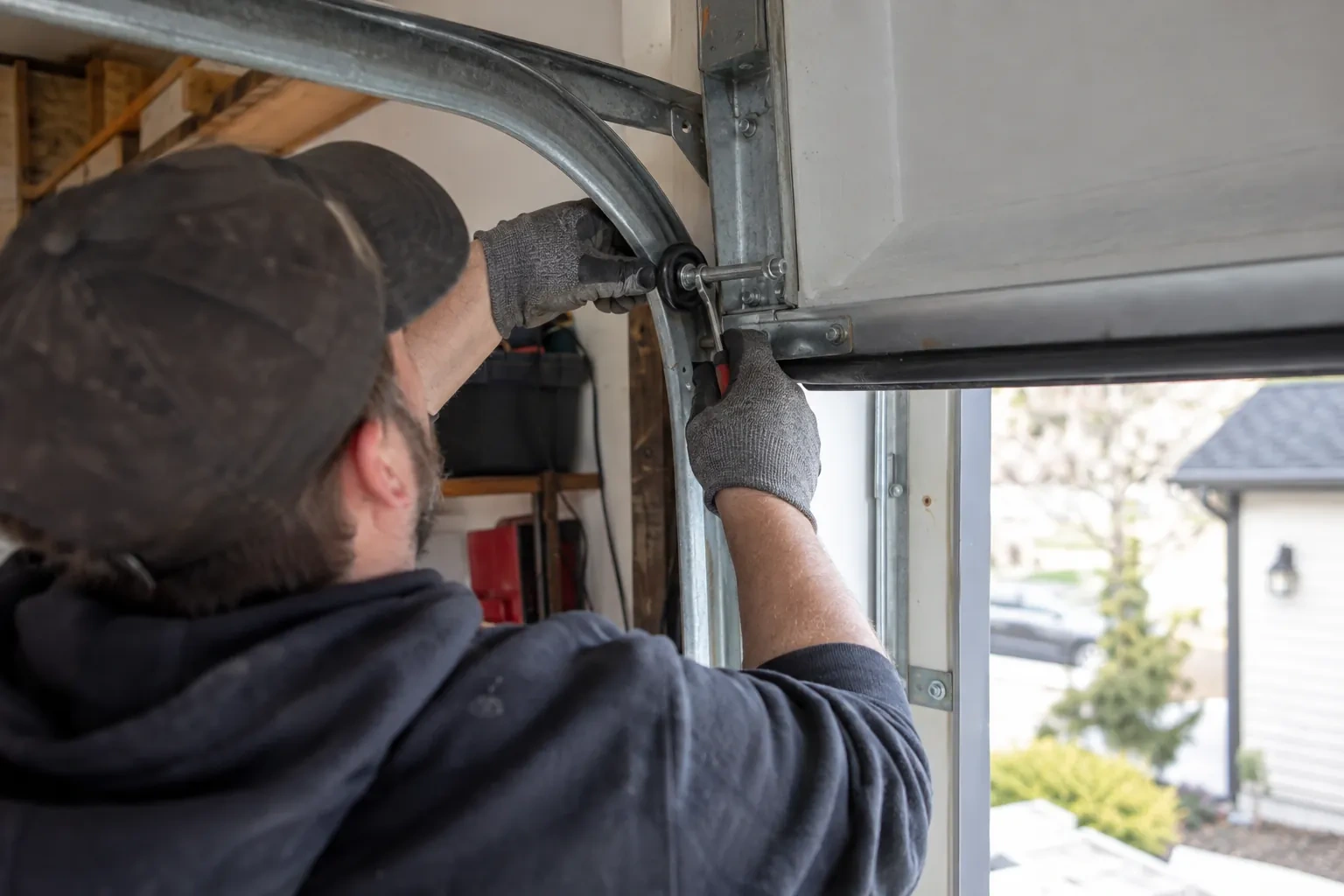
Spring adjustment or replacement, tired rollers, cracked hinges or frayed cables discovered when the door is lifted by hand are quoted as door work in their own right, never folded into the opener.
What to have ready
- Is there a grounded receptacle in the ceiling near the opener, or is it running from an extension cord?
- Would you like a keypad outside, phone control, a camera or battery backup?
- How wide and how tall is the door, and is it a single or a double?
Garage Door Opener Replacement: questions
QuestionsWhy does the technician test the door by hand before anything else?
Because the opener depends on the springs. With the old unit disconnected, a balanced door lifts with moderate effort and stays put at roughly waist height. A door that drops or drifts is telling the technician the springs need adjusting, and doing that first means the new operator is never asked to haul a heavy door, which would shorten its life and mask a problem that belongs to the door.
Chain or belt: which should I choose?
Both move the same doors, so the choice is about sound and setting. Chain is the sturdy, simple workhorse and a fine fit for a detached garage or a workshop where a little noise is nobody's concern. Belt is the pick when a bedroom, nursery or office shares a wall or floor with the garage, because it starts and stops softly and hums rather than rattles. If the ceiling is crowded, a wall-mounted unit beside the spring shaft removes the rail altogether.
Will the new opener cope with an unheated garage in winter?
Yes, when it is chosen for it. Manufacturers publish an operating temperature range for each model, and the technician matches that to a detached or unheated garage. The force setting is tuned so the door moves in the cold without the operator being oversensitive, the hardware gets a cold-rated lubricant, and a backup battery is kept charged by the unit. Clearing ice from the threshold remains the one winter chore.
Related services
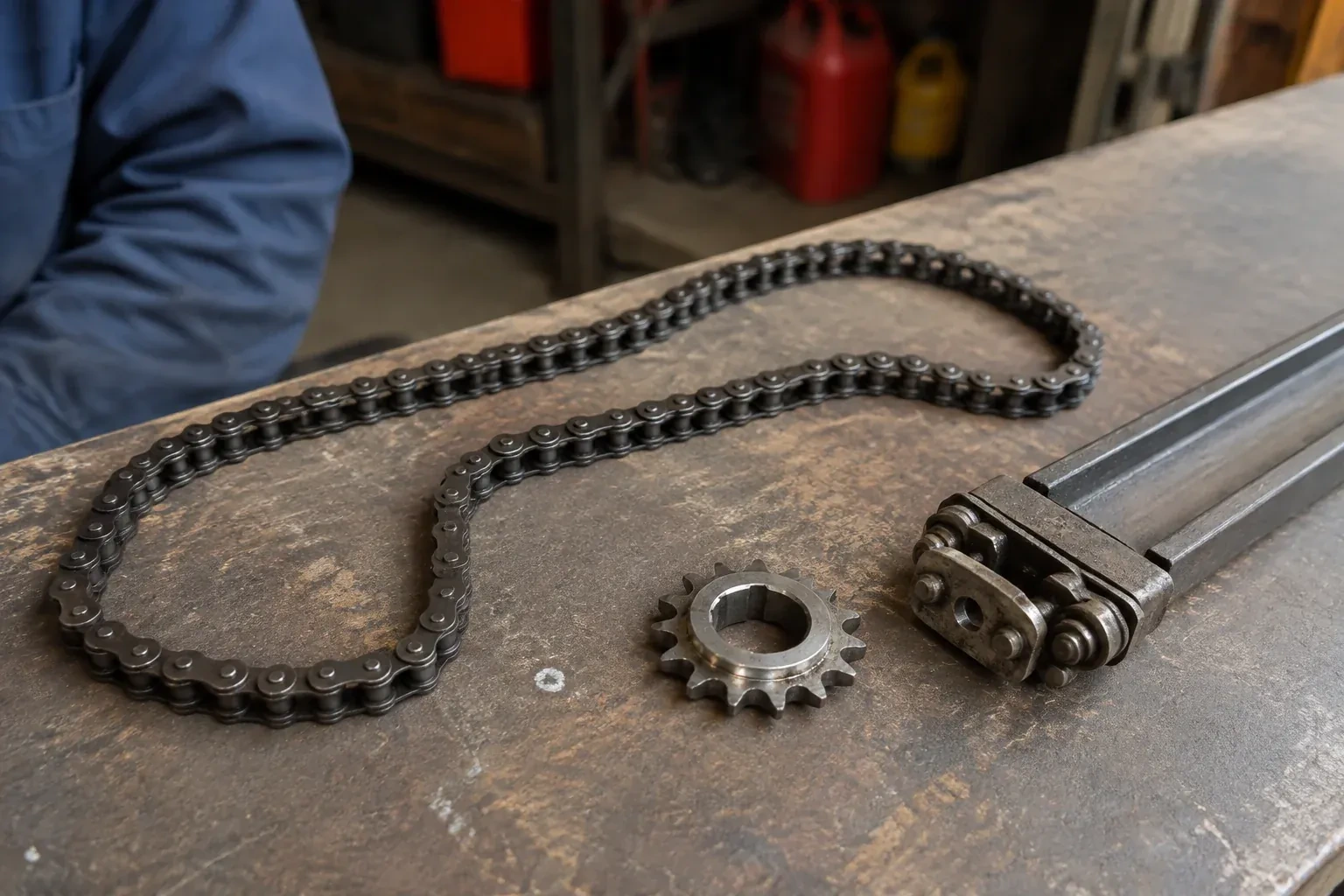
- Chain-Drive Opener RepairThe door opens about a third of the way and stops.
- Belt-Drive Opener RepairThe belt looks fine from a distance, but up close the rubber has cracked across the back in dozens of places and, in one spot, you can see the steel cords showing through.
- Photo-Eye Sensor Alignment or ReplacementThere are no sensors at the floor at all, or a previous owner has wired the pair together up beside the motor so the beam never crosses the doorway.