Springs · Toronto
Extension Spring Replacement
One of the springs beside the track is hanging loose at the front end, its pulley dangling, and a length of cable lies slack along the top of the door.
In plain words
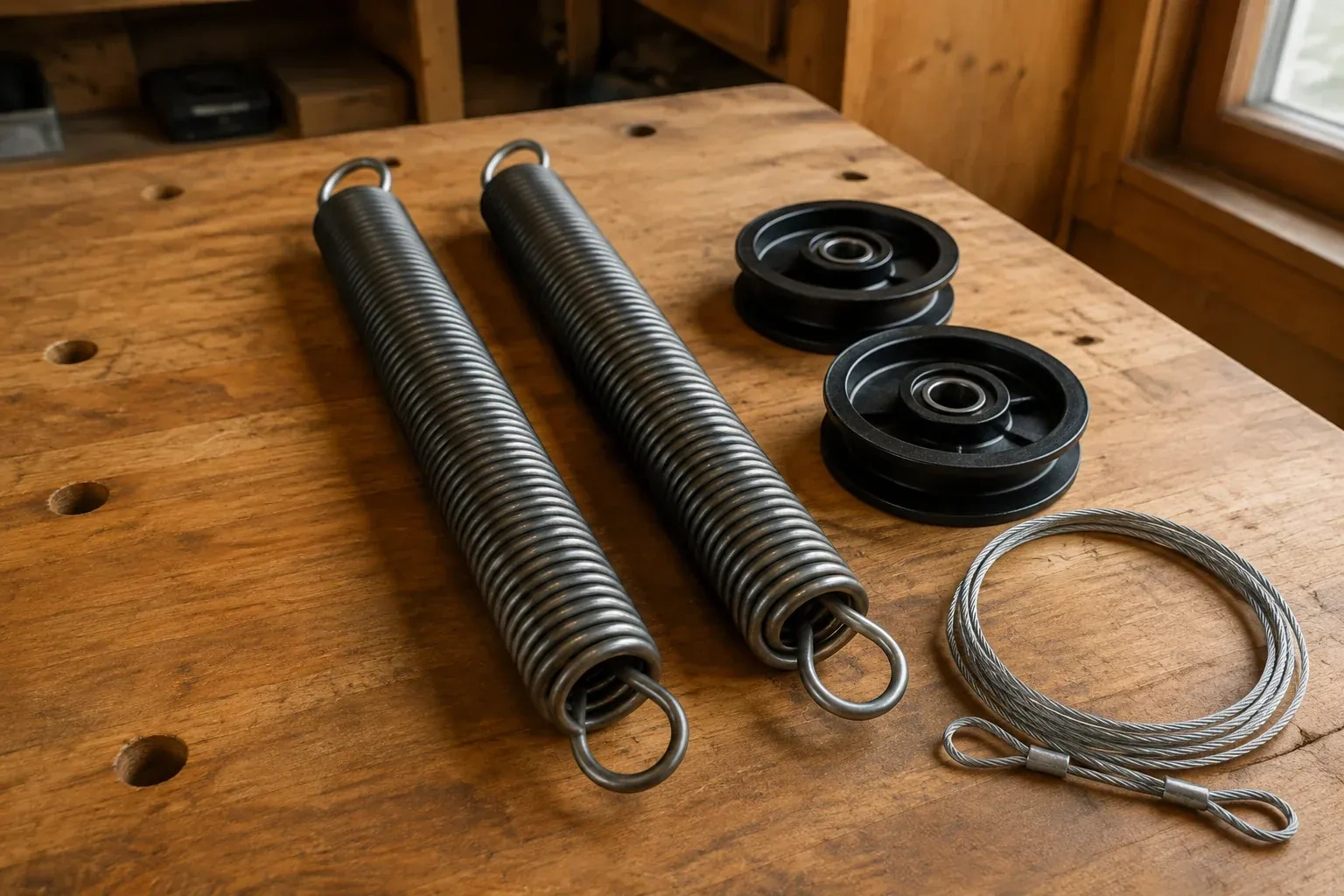
Extension springs are common on the detached garages behind older houses, where a low ceiling left no room for a torsion shaft, and those garages are rarely heated. Damp summers, hard frosts and salt carried in on the car pit the spring wire over the years, and a fatigued spring most often lets go on a cold morning when the steel is stiffest. Replacement fits a new pair rated for the door, renews the pulleys and cables that have rusted alongside them, adds containment cables where the original installation never had any, and leaves a door that lifts easily by hand when the power is out.
How the visit goesOne of the springs beside the track is hanging loose at the front end, its pulley dangling, and a length of cable lies slack along the top of the door. The door sits slightly crooked and the opener reverses whenever it tries to close.
Extension Spring Replacement
How the visit goes

Torsion or extension, and which extension layout
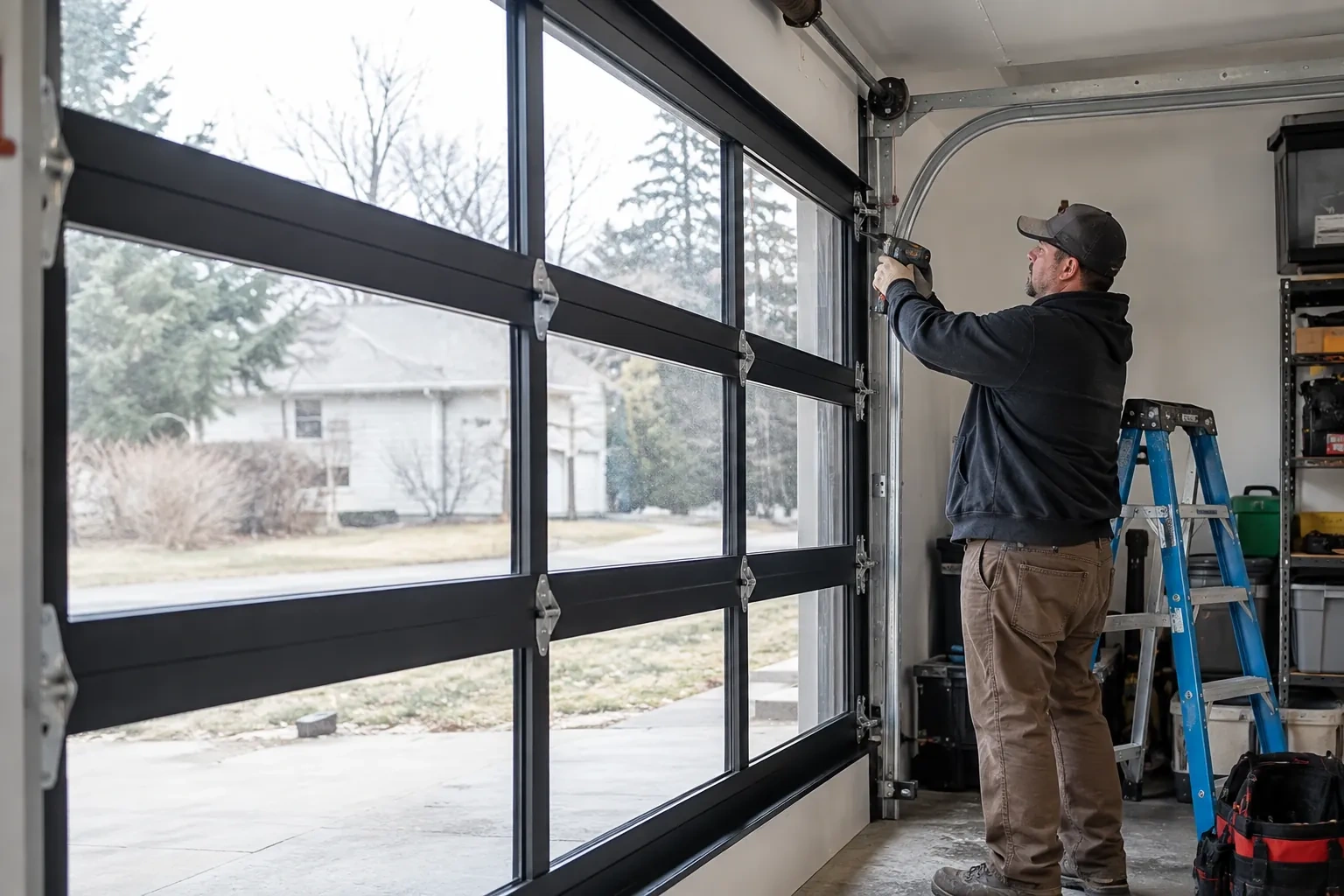
The technician confirms the counterbalance type before choosing any part. Extension springs hang beside the horizontal tracks, one each side, with a pulley on the front end of each spring and a second, fixed pulley on the track angle near the door opening; the lift cable runs from the bottom corner over both. A torsion system has a spring on a shaft above the opening and belongs to a different service. Extension systems also vary: single or double springs per side on heavier doors, hangers fixed to the ceiling or to the rear track support, and cables that adjust at an S-hook, a clip or an eyebolt. Each affects the parts brought to the job.
Bringing the opener back into step
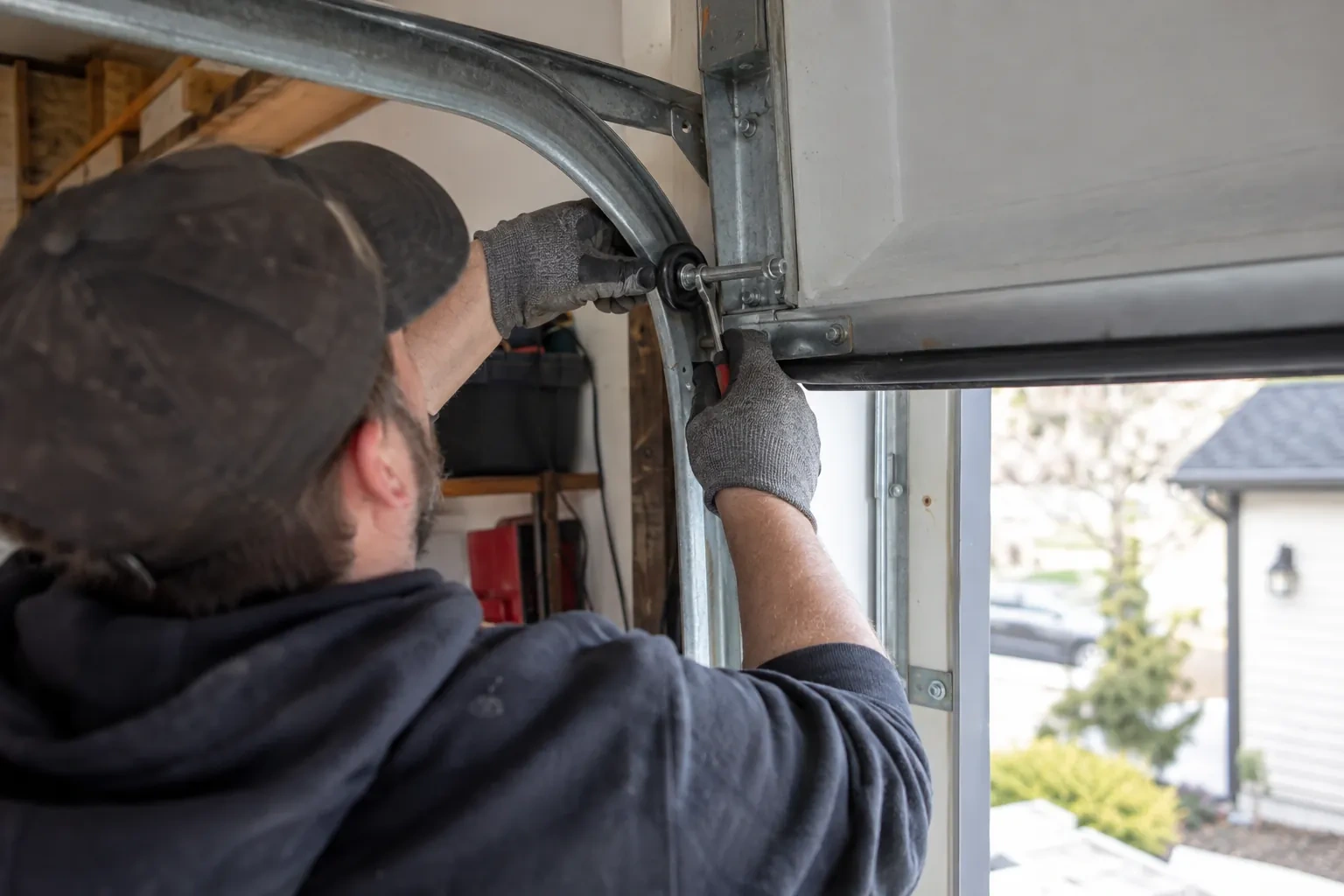
The opener is the last thing touched. Once the door balances by hand, the trolley is reconnected and the door run through several full cycles under power while the technician watches the cables ride their pulleys and the springs stretch evenly. Because the door is now lighter to move than it was on tired springs, the opener's force and travel settings are reset to suit; a force setting left high would push a balanced door too hard. Then the reversal checks are done in front of you: a block laid flat under the centre of the door, which the door must touch and reverse from, and a hand passed through the photo-eye beam while the door closes.
A door that lifts as it was designed to
The difference is felt the first time you pull the release cord and lift the door yourself. It rises with one hand, pauses where you leave it, and comes down at the speed you lower it rather than dropping the last stretch. Under power, the opener runs without the strain in its note that had crept in as the old springs tired, and the door reaches the floor evenly along the seal. Both springs now stretch to the same length as the door closes, both pulleys turn without a squeal, and the cables lie in their grooves. A door in this condition puts little wear on the opener, which is good news for the motor.
Extension Spring Replacement
In the van
Extension springs, matched pair
Rear spring hangers and angle iron
Door-weighing scale
Pulleys (sheaves) and forks
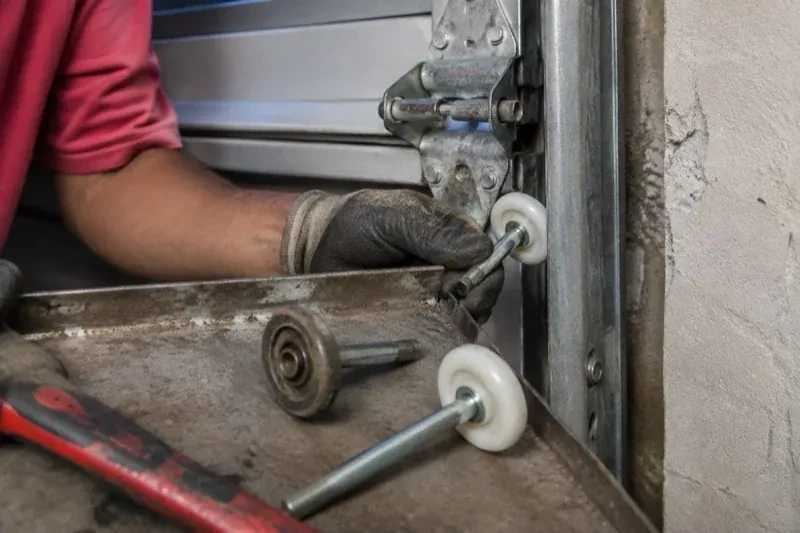
Bottom brackets and clevis pins
Extension Spring Replacement
What affects the quote
Door weight and size
Spring rating follows the door's weight, and a wide insulated door or a wood door takes heavier springs than a light single. Weight and height together set the parts on the quote.
Opener adjustment and testing
Resetting the opener's force and travel to the newly balanced door and running the reversal tests is a short task that the quote names when it applies.
Converting to torsion instead
Where the garage has the headroom, some owners take the opportunity to move to a torsion system. That is a different job with different hardware and is quoted as its own option.
What to have ready
- Has insulation, glass or a wood facing been added to the door?
- Is a car parked inside that will need to come out first?
- Is it a single or a double door, and what is it made of?
Extension Spring Replacement: questions
QuestionsHow do you know which springs my door needs?
By weight. Extension springs are rated for the weight they lift, so the technician releases the opener and weighs the door on a scale, then matches that figure and the door's height to a spring rating and stretch length. The old springs are measured as a check on wire size, coil diameter and length. Where the two disagree, the scale decides, since doors gain weight from added insulation or panels.
Should I try to open the door by hand before the technician arrives?
No need, and it is easier on the door if you leave it. With a spring broken or slack, the door is unbalanced and heavy, and lifting it can let it drop or twist a section in the track. If the door is stuck partway, leave it there and keep people and the car away from the opening. The technician brings clamps and props, and the door is secured before it is moved at all.
How long do extension springs last?
Springs are rated in cycles, one cycle being a full open and close, and a standard set is built for a number in the ten-thousand range. A door used four times a day gets through that in several years; a door used a few times a week takes far longer. An unheated, damp garage shortens the figure through rust. Regular lubrication and a door kept in balance stretch it out.
Related services
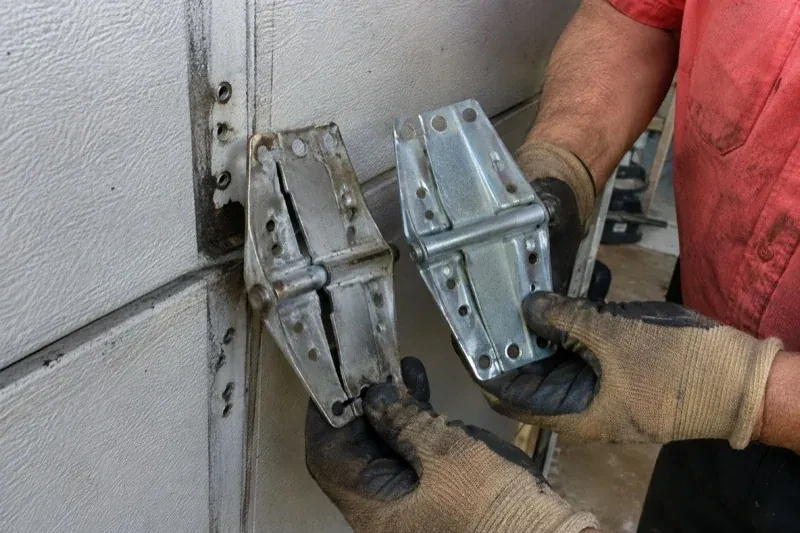
- Garage Door Hinge ReplacementOn the old wood door, one hinge has pulled away from the panel, dragging a screw and a chunk of soft timber with it.
- Garage Door Track Repair or ReplacementAfter a decade of slushy winters the bottom foot of the track is flaking rust.
- Garage Door Cable ReplacementThe cable has wrapped itself around the shaft above the door instead of sitting on its drum.