Springs · Toronto
Garage Door Cable Replacement
The cable has wrapped itself around the shaft above the door instead of sitting on its drum.
In plain words
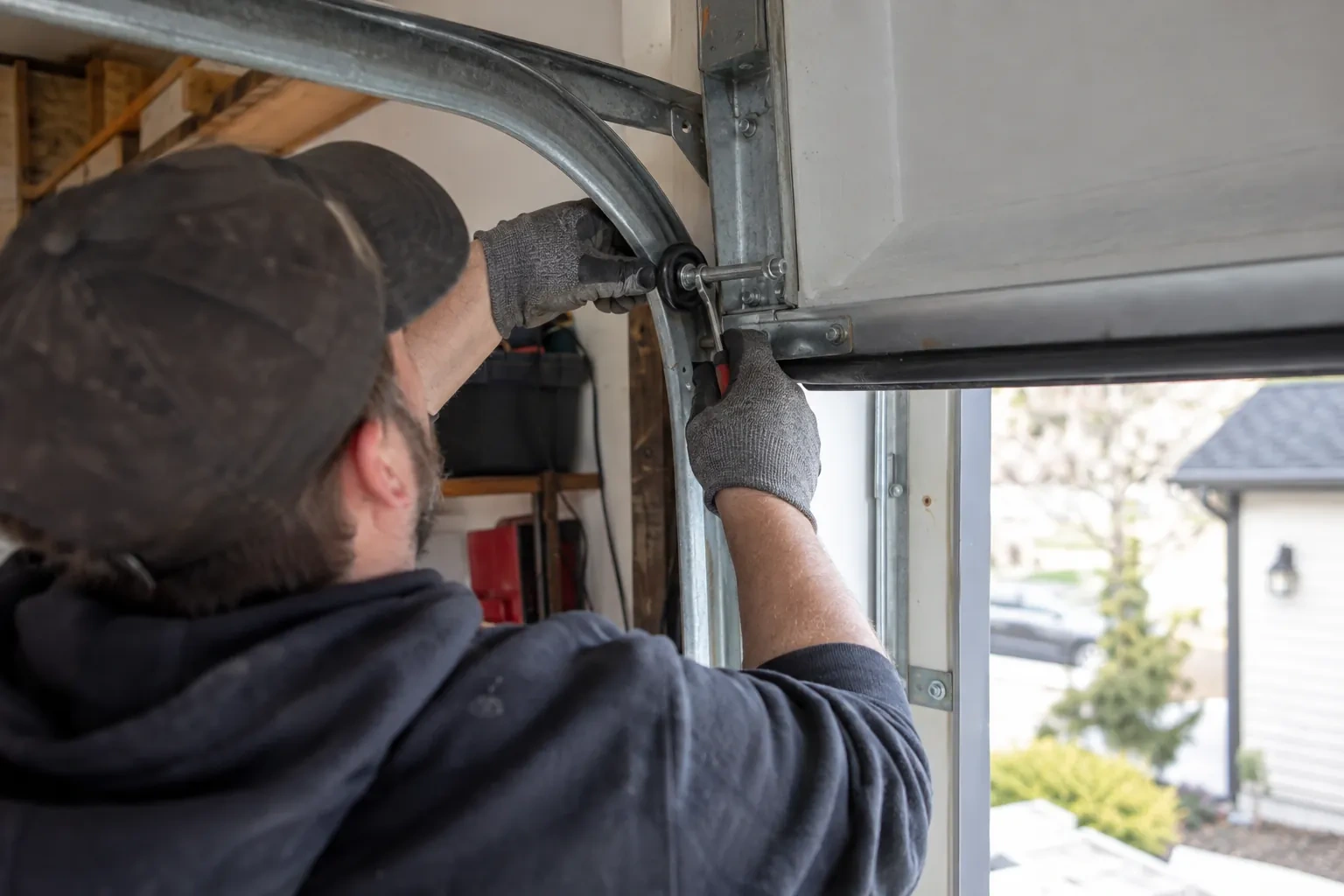
A cable visit runs in a set order. First the opener is disconnected and the door clamped so nothing can move. Then the counterbalance is unloaded so the drums, cables and bottom brackets can be handled calmly. The old cables come off, the drums and brackets are inspected, and new cables of the correct specification go on. Both sides are tensioned evenly until the door sits level, then the springs are wound back to the turns the door height calls for. Finally the door is balanced by hand, the opener reconnected and its travel and reversing checked. You are shown the finished door working before the technician leaves.
How the visit goesThere was a sharp crack from the garage, and when you went to look the door had dropped on one side and jammed. A length of cable lies coiled on the floor by the bottom roller.
Garage Door Cable Replacement
How the visit goes
Making the door safe to work on
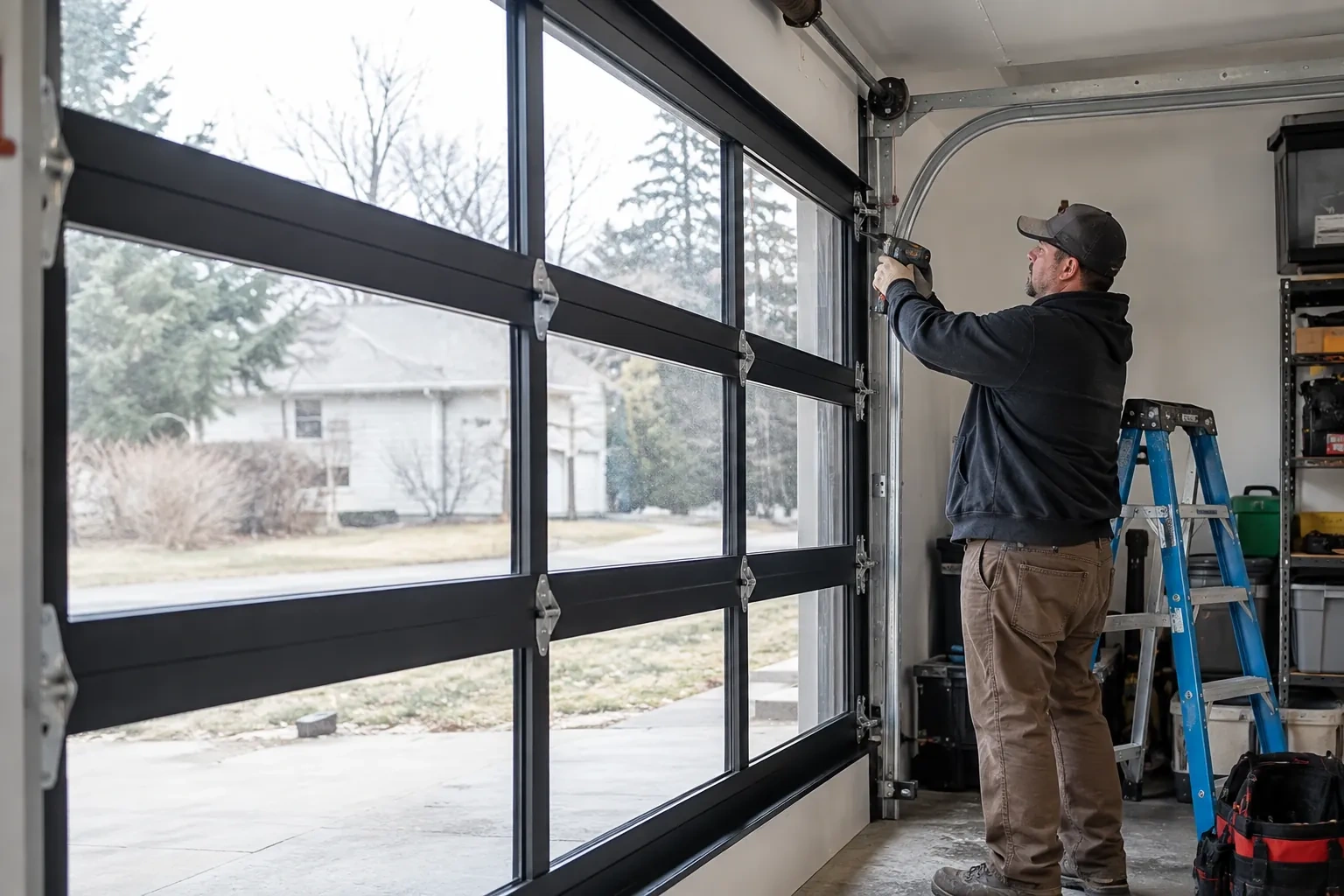
Nothing is touched until the door cannot move. The technician pulls the opener's release cord so the motor is out of the picture, clears the opening, and clamps the track just above a roller or props the door if it is jammed partway. If one cable has let go, the door is probably tipped and binding in the track, with its weight resting unevenly on the remaining cable and spring, so the first job is to take that weight on clamps or a support. Only then does the assessment of drums, springs and brackets begin. This step is calm and deliberate, and it is what allows every later step to be done with both hands.
Winding the springs back on
The torsion springs are wound back up with the winding bars, a quarter turn at a time, to the number of turns the door height calls for, which is roughly one full turn for each foot of door plus a small allowance the technician judges from the balance test. The cone set screws are tightened to the shaft, the bars are removed, and the clamps come off. The cables are watched as the door is raised to make sure each wraps onto its drum in a single neat layer with no overlap and pays out cleanly on the way down. A quarter turn added or removed fine-tunes the balance.
Cables and springs on the same clock
Cables and springs age together, and your new cables now have a head start on the springs that remain. If the springs were assessed and left in place, you have a rough idea of the cycles they have left, and the sensible plan is to have them changed as a pair before they break, at which point the cables are checked again and simply re-tensioned. A door that starts to feel heavy, a spring that has gone quiet and then begins to creak, or a gap appearing in the coil are the signs to act on. Handled this way, the counterbalance is renewed in planned visits rather than on a difficult morning.
Garage Door Cable Replacement
In the van
Track clamps or locking pliers
Drum set screws
Extension-spring pulleys and sheave forks
Silicone garage-door lubricant
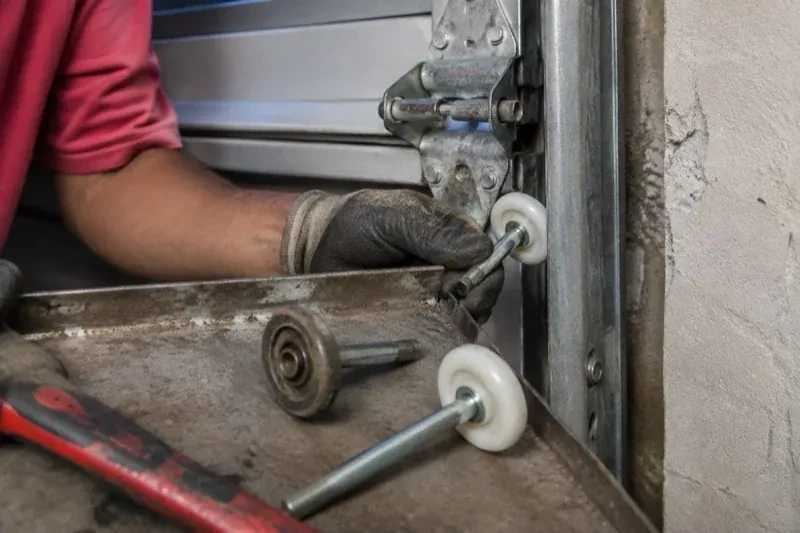
Cable drums, matched pair
Garage Door Cable Replacement
What affects the quote
Whether a matching part has to be special-ordered
Most drums, brackets and cable sizes are common stock, but an older or uncommon door sometimes needs a part matched to its exact dimensions. When that happens the technician identifies it on the first visit and arranges the part before the return trip.
Springs found weak or broken
If the inspection shows a spring that is broken, stretched or wound short, replacing it is explained and priced separately from the cable work, and the two are done in one visit if you agree.
Opener adjustment afterwards
A newly balanced door often needs the opener's travel limits and force settings reset and its reversing tested. That short adjustment is named in the quote when it is needed.
What to have ready
- Does the opener still run, and does it strain or reverse?
- Is anything stored close to the door or under the spring shaft?
- Is there rust on the cables or brackets near the floor?
Garage Door Cable Replacement: questions
QuestionsCan I use the door as soon as the work is finished?
Yes. The visit ends with the door balanced by hand, run through full cycles and the opener reconnected and tested, so it is ready for normal use the moment the technician packs up. There is no settling period for cables. It is a good idea to watch the first few openings yourself to get a sense of how a level, balanced door sounds, so you notice any change later.
Should I keep using the opener until the technician arrives?
It is better to leave the door where it is and use another way in and out. Running the opener against a crooked or cable-slack door tends to tangle the cable further, twist the top section and knock the door out of its track, which adds to the repair. Pull nothing and adjust nothing; simply keep the opening clear and let the technician take it from there.
What are garage door cables made of?
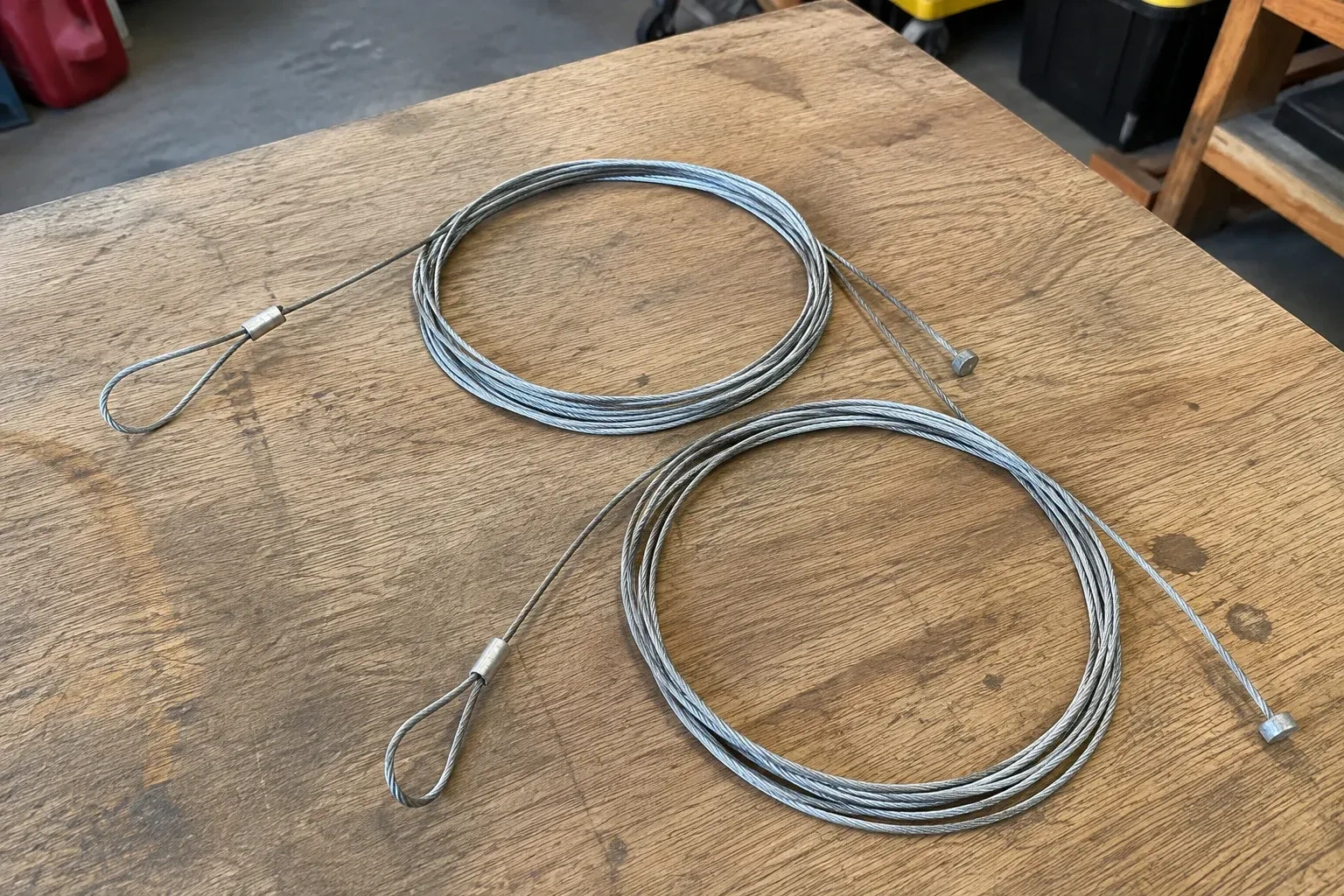
They are galvanized aircraft-type wire rope: many fine steel wires twisted into strands, and the strands laid around a core, which gives a cable that bends around a small drum thousands of times without fatiguing. One end carries a swaged stop or a loop for the drum, the other a loop that fits over the bottom bracket pin. Diameter and length are chosen for the door's weight and height.
Related services
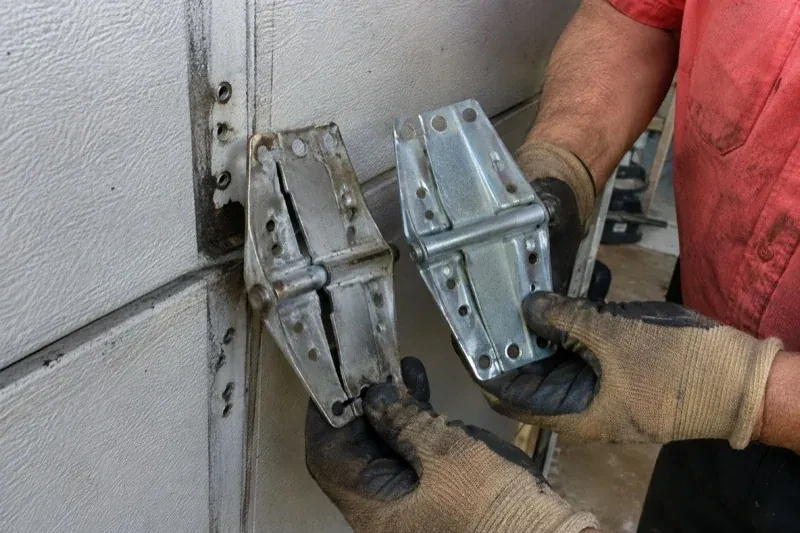
- Garage Door Hinge ReplacementOn the old wood door, one hinge has pulled away from the panel, dragging a screw and a chunk of soft timber with it.
- Garage Door Track Repair or ReplacementAfter a decade of slushy winters the bottom foot of the track is flaking rust.
- Torsion Spring ReplacementOn a cold morning the remote does nothing useful: the light comes on, the motor turns briefly, the door stays shut.