Openers · Toronto
Belt-Drive Opener Repair
The belt looks fine from a distance, but up close the rubber has cracked across the back in dozens of places and, in one spot, you can see the steel cords showing through.
In plain words
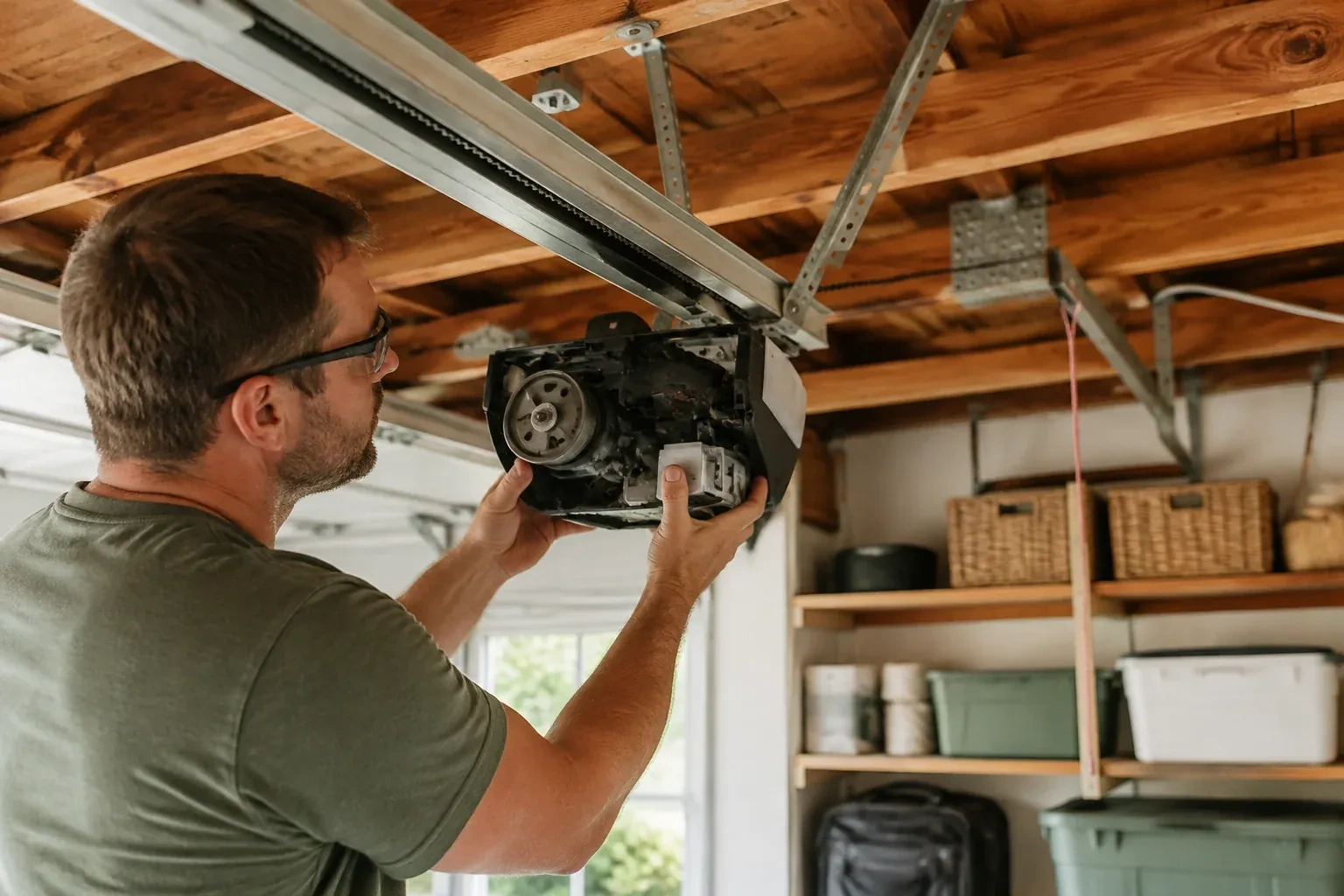
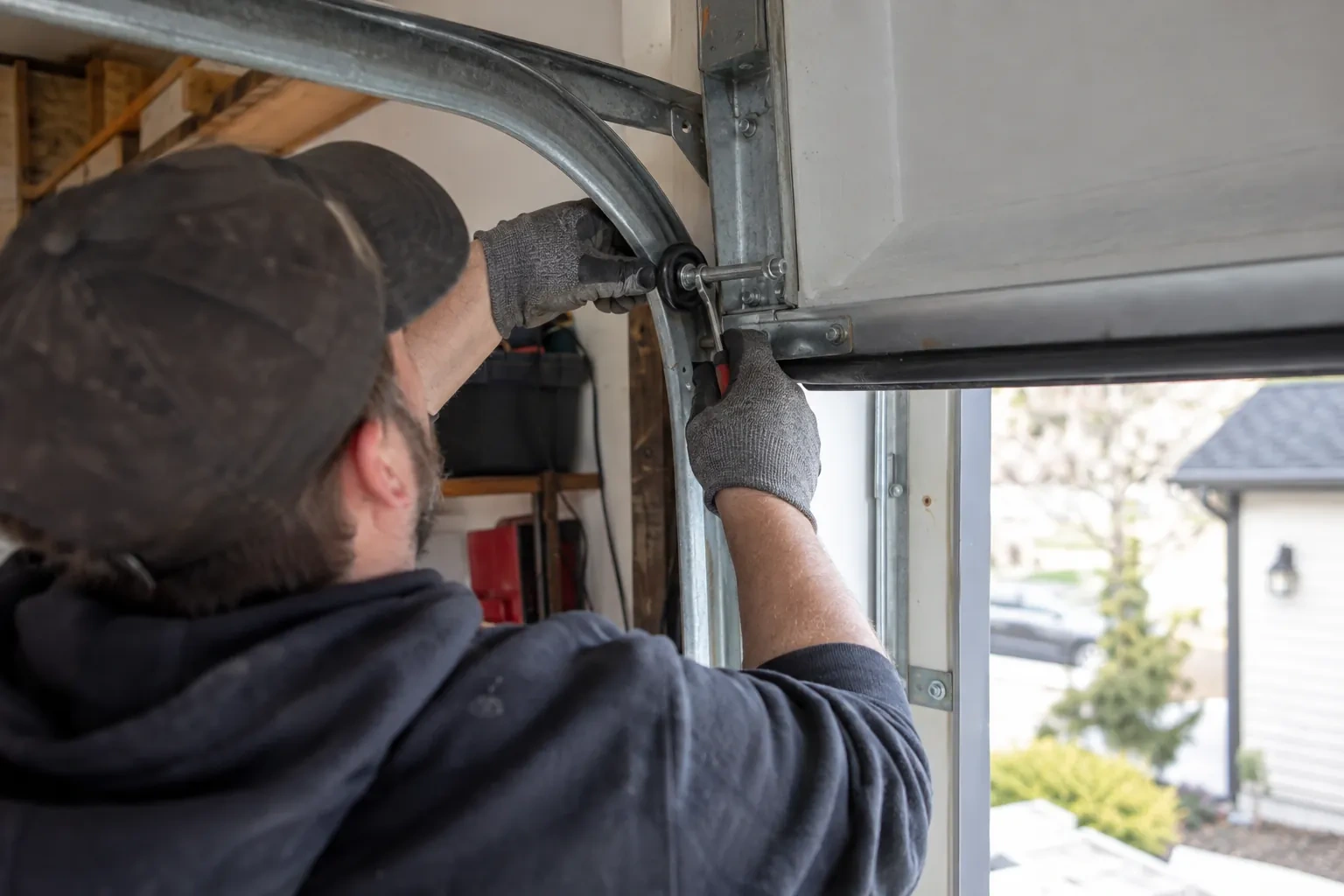
A stalled belt drive is often a trolley problem, not a belt problem. The trolley rides the rail in two halves: an outer part linked to the door arm and an inner part gripped by the belt. Pulling the red cord parts them so the door can be lifted by hand; running the operator, or a second pull, locks them again. When the release lever sticks, the housing cracks or the halves refuse to re-engage, the motor moves the belt and nothing else. Repair means freeing or replacing the trolley, checking the belt for damage from the drag, and confirming the inner half is in step with the motor.
How the visit goesAfter the power came back you pulled the red cord to get the car out. Since reconnecting, the door stops short of the floor, and no amount of turning the limit adjustment brings it the rest of the way down.
Belt-Drive Opener Repair
How the visit goes
Reading the belt from end to end
With the trolley run to one end of the rail and then the other, the whole length of the belt passes under the technician's eye and fingers, on the top run and the return. What they are looking for is specific: cracks across the back of the rubber, a glazed shine that says the belt has been slipping, an edge gone fuzzy from rubbing, a stretch where the teeth are flattened or torn away, cords showing through, and the state of the clip or link where the belt meets the trolley. Each of these points to a different cause as well as a different repair, and where the wear sits along the belt says a lot about which.
Fitting a new belt
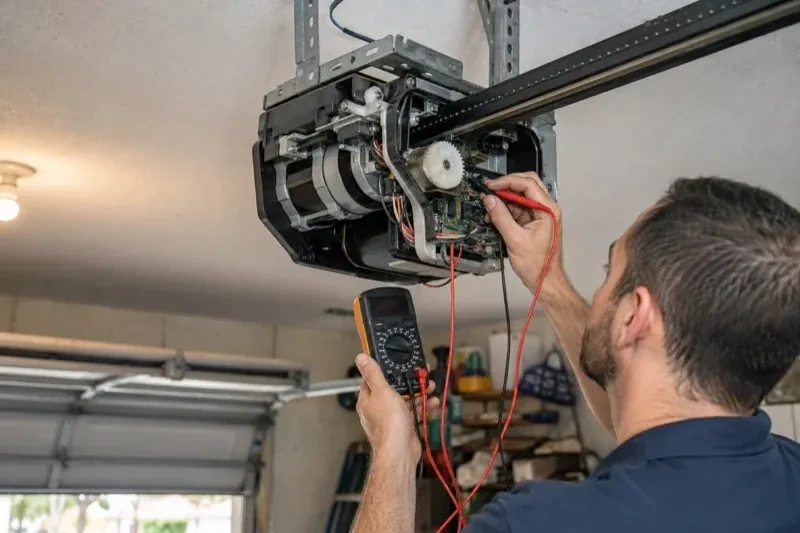
A replacement belt is matched to the rail length and to the tooth pitch of the sprocket, so a belt for a 7 ft door rail differs from one for an 8 ft rail. The old belt is unclipped from the trolley, lifted off the drive sprocket and drawn back around the idler pulley. The new belt is threaded the same way in reverse, teeth toward the sprocket, its ends joined to the trolley shaft with a fresh clip or master link. The technician confirms the belt sits centred on the pulley and in the rail, then tensions the spring to specification. Because the sprocket was bare, the motor and trolley are phased before the door is reconnected.
A door that is balanced under a belt that is right
Because the door was tested by hand before the belt was touched, you leave with the springs and the drive in agreement. Once a season, with the door closed, unplug the operator, pull the release and lift the door to about a metre: it should stay there. If it drifts down or creeps up, the springs have moved and the belt will soon be working harder than it should, so book a spring adjustment before the belt shows it. A door that hesitates at one point in its travel with the operator disconnected is telling you about a roller or a hinge rather than the belt, and that too is a small visit.
Belt-Drive Opener Repair
In the van
Reinforced drive belt with clip
Door arm and clevis pins
Photo-eye sensor pair
Drive gear and sprocket kit
2x4 offcut for the reversal test
Belt-Drive Opener Repair
What affects the quote
Rail straightening or re-hanging
A bent rail, a sagging hanger or a misaligned rail joint that has been fraying the belt is corrected as part of the repair so the new belt runs clean, and the labour appears on the quote.
Height of the ceiling
Where the operator hangs under a tall or vaulted ceiling, the sprocket and idler are reached from taller ladders and the work at the head takes longer.
How far the technician drives
A garage on the edge of town and one down a long rural road take different time to reach, and that trip is a line of the quote.
What to have ready
- Is the garage heated and attached to the house, or a cold detached one?
- What make and model is printed on the motor head, and roughly how old is it?
- Is anything hung from the ceiling or rail, such as a bicycle hook or storage rack?
Belt-Drive Opener Repair: questions
QuestionsWill the safety sensors be tested as part of the repair?
Yes, every time. After the drive work and the relearning of travel and force, the technician runs the door onto a 2x4 laid flat on the floor to confirm it reverses on contact, and passes an object through the photo-eye beam while it closes to confirm it reverses again. The sensors' height and alignment are checked, and the tests are shown to you so you can repeat them monthly.
What information helps when I book a belt-drive repair?
The make and model printed on the motor head, roughly how old the operator is, what the belt is doing and what it sounds like, when it started, whether the red cord has been pulled and whether anyone has adjusted anything. A photograph along the rail showing the belt, and one of the label, settle most questions before the visit.
Does the trolley need replacing when the belt does?
Not usually. The trolley is checked while the belt is off: its halves should part with the release cord and lock again, the housing should be free of cracks and it should ride the rail without play. A trolley that passes those checks stays and simply receives the new belt and a fresh clip. One that sticks or rattles is replaced in the same visit.
Related services
- Chain-Drive Opener RepairThe door opens about a third of the way and stops.
- Garage Door Opener ReplacementThe bedroom above the garage shakes every morning at six when the chain drive fires up.
- Photo-Eye Sensor Alignment or ReplacementThere are no sensors at the floor at all, or a previous owner has wired the pair together up beside the motor so the beam never crosses the doorway.