Springs · Humber Summit
Garage Door Track Repair or Replacement in Humber Summit
After a decade of slushy winters the bottom foot of the track is flaking rust.
In plain words
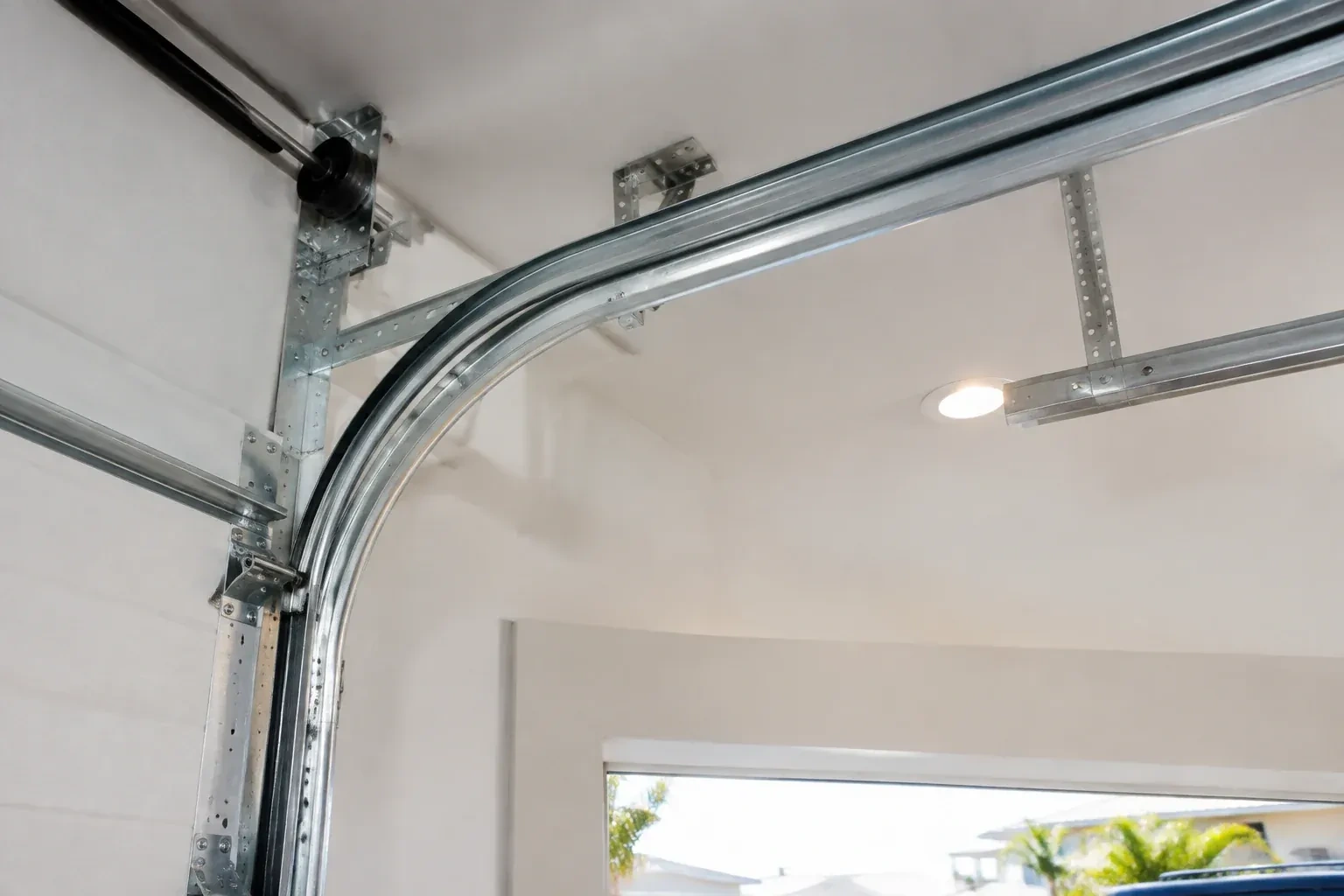
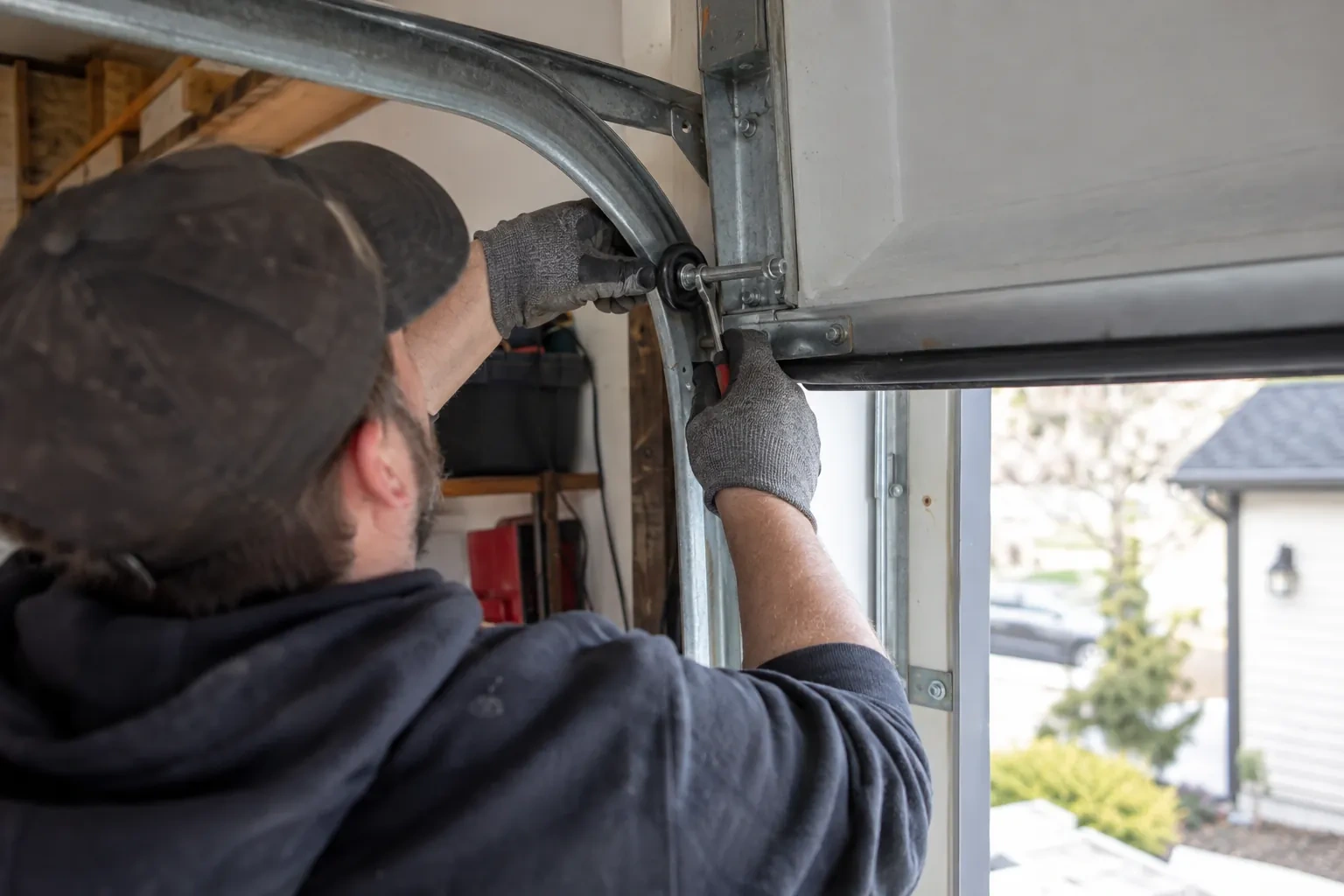
The track is the pair of steel channels that guide every roller on a sectional garage door: a vertical run fixed to each jamb, a curve overhead, and a horizontal run hung from the ceiling. Track repair puts a bent, spread, loose or corroded run back to the shape and position the door needs, and replacement renews the pieces that are beyond straightening. The technician secures the door, measures the track against the door and its lift type, corrects or replaces what is damaged along with its brackets and fasteners, and finishes with a balance and travel test so the door runs squarely again.
How the visit goesYou bought the house with a door that sticks near the top of its travel. The vertical track was screwed tight against the jamb, so the door drags along its stop moulding on every trip instead of swinging clear.
Garage Door Track Repair or Replacement
How the visit goes
Jamb brackets, lag screws and the wood behind them
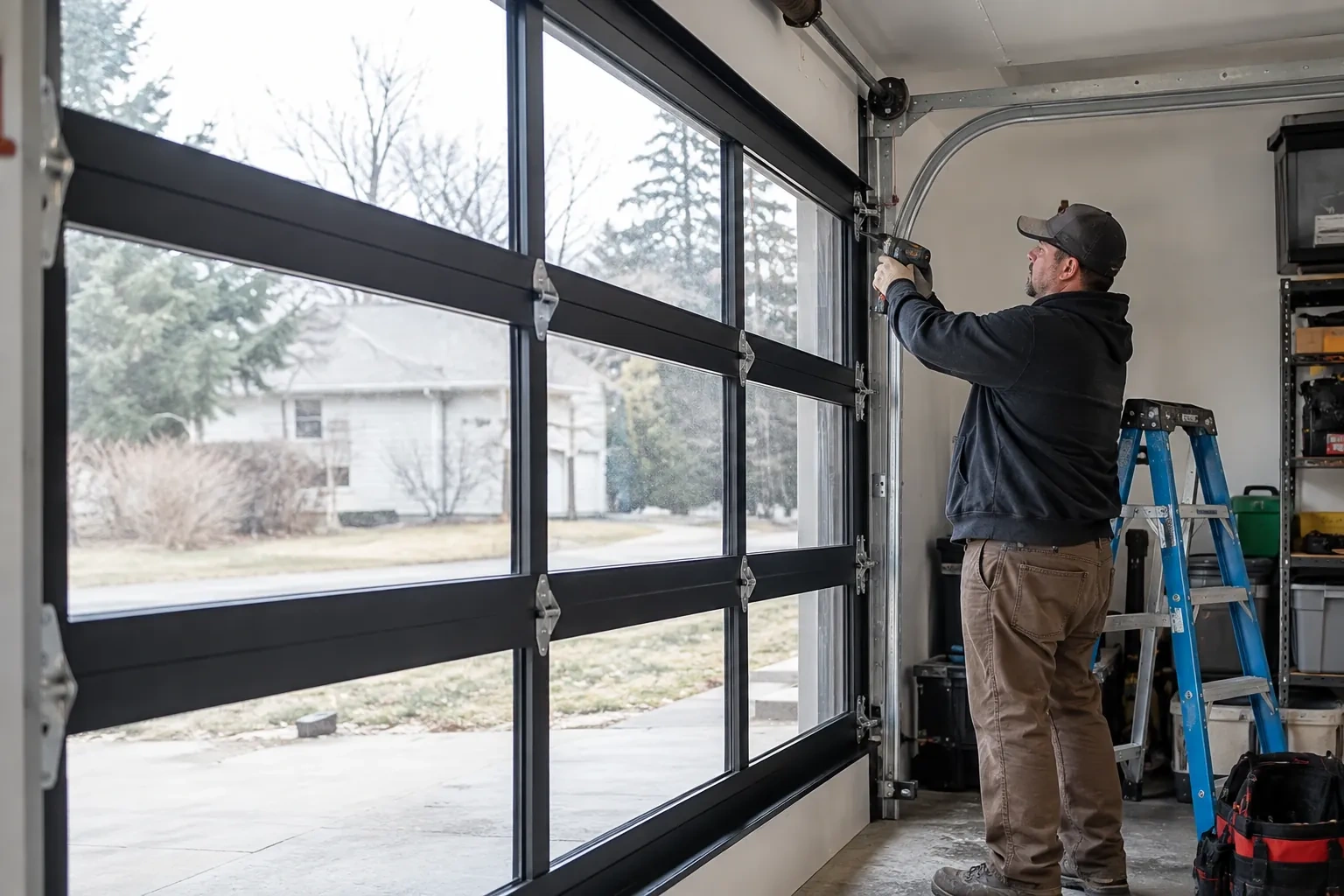
Every fixing along the vertical track is tested by hand and by eye. Jamb brackets that rock, lag screws that turn without tightening, and a continuous angle standing off the wood all mean the track has been free to move. The technician then looks at the jamb itself, probing the bottom foot for softness where splash and salt have soaked in, and checking for splits around the screw holes. In an older garage the wood is often the real fault, and no amount of tightening holds a screw in punky timber. Where that is the case, sistering or replacing the lower jamb goes onto the plan alongside the track.
Fixing into sound framing
Track is only as steady as the wood it is screwed to. Where the bottom of a jamb has gone soft, the technician cuts back to solid timber and sisters a new piece alongside or replaces the lower length, fastening it through to the framing behind. Enlarged or stripped screw holes higher up are plugged and re-drilled, or the bracket is moved to fresh wood. Lag screws of the right length and diameter are driven into the jamb, and any hanger anchored into ceiling finish alone is moved to a joist or given a length of angle to reach one. This is unglamorous work, and it is the reason the alignment lasts.
Signs worth a call before the door jams
A well-set track stays that way, but doors live busy lives, and a few early signals mean an easy adjustment instead of a stuck door. A new rub mark on the weatherstrip, a roller that squeaks at the same point each trip, a door that starts to lean or that closes with a gap at one corner, a bracket with a shadow behind it, or a horizontal run that looks a shade lower than its partner: any of these is the track beginning to move. Mention what you saw and where, and the technician can usually put it right in a short visit. Catching it early also spares the rollers and hinges the wear a misaligned track hands them.
Garage Door Track Repair or Replacement
In the van
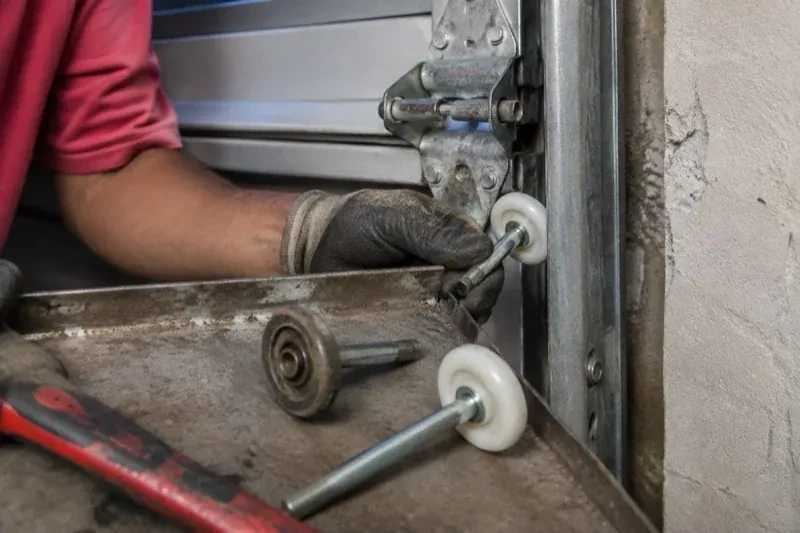
Replacement rollers and hinges
Track pliers and dead-blow hammer
Top fixtures
Lag screws and track bolts
Vertical track, two-inch or three-inch
Garage Door Track Repair or Replacement
What affects the quote
Access and storage around the track
Shelving, a workbench or a ceiling full of stored goods around the horizontal run slows the work. Clearing the area beforehand changes the time quoted.
Door size and weight
A tall or double door has longer runs of track and heavier loads on the brackets, and a heavy insulated or wood door may call for heavier-gauge track and more substantial hangers.
Straighten or replace, piece by piece
A dent dressed in place is labour only, while a kinked, cracked or rusted length means a new piece of track. The quote lists which pieces get which treatment.
What to have ready
- Do you know what caused it, such as a car, a ladder or stored items?
- Has any roller come out of the channel?
- Can you see a bracket standing away from the wood or screws backing out?
Garage Door Track Repair or Replacement: questions
QuestionsWhy is there a gap between the track and the edge of the door?
That gap is intentional. The rollers sit on stems that reach out from the hinges, and the track stands a set distance from the door so the wheels ride in the channel without the door's edge touching the track. The gap should be equal on both sides and slightly larger at the top of the vertical run, which is the taper that lets the door seal at the stop and release on opening. Unequal gaps are a sign the track has moved.
How often should the track and its fasteners be checked?
A glance each month from inside the garage, with the door closed, is enough to catch a bracket standing off the jamb or a hanger starting to lean. Twice a year, snug the bracket bolts and lag screws, wipe out the channel, and watch the door make a full trip to confirm every roller stays in the track. The industry guidance also suggests an annual visit by a trained door technician, who checks the track with the rest of the system.
Why is the horizontal track sagging?
The horizontal run hangs from the ceiling on back hangs of perforated angle, and it sags when a hanger bends, its screws pull out of a joist, or it was only ever fixed into drywall. A sagging hanger droops that run out of level or its intended pitch. The fix is a straight or new hanger screwed into solid framing, with the run set to the manufacturer's specified pitch and matched to its partner; a door that drifts back toward the opening once raised is a separate, balance-related symptom.
Related services
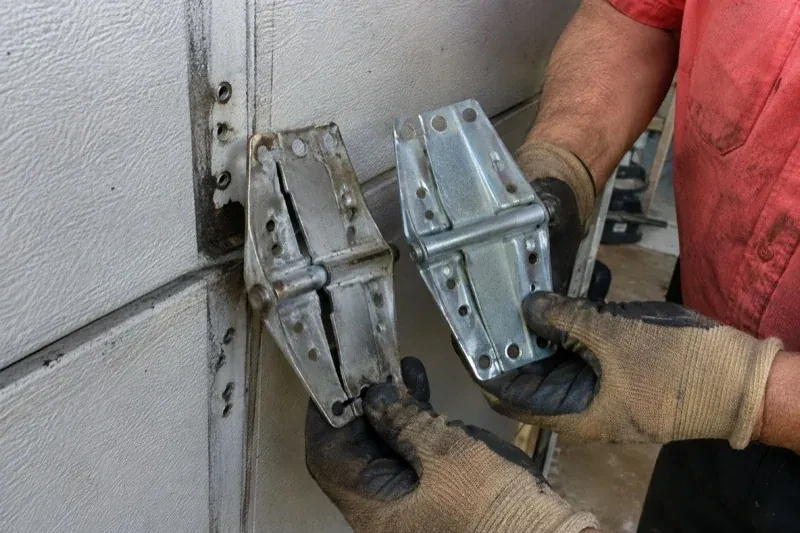
- Garage Door Hinge ReplacementOn the old wood door, one hinge has pulled away from the panel, dragging a screw and a chunk of soft timber with it.
- Garage Door Cable ReplacementThe cable has wrapped itself around the shaft above the door instead of sitting on its drum.
- Torsion Spring ReplacementOn a cold morning the remote does nothing useful: the light comes on, the motor turns briefly, the door stays shut.