New Doors · Beaumonde Heights
High-Lift Garage Door Conversion in Beaumonde Heights
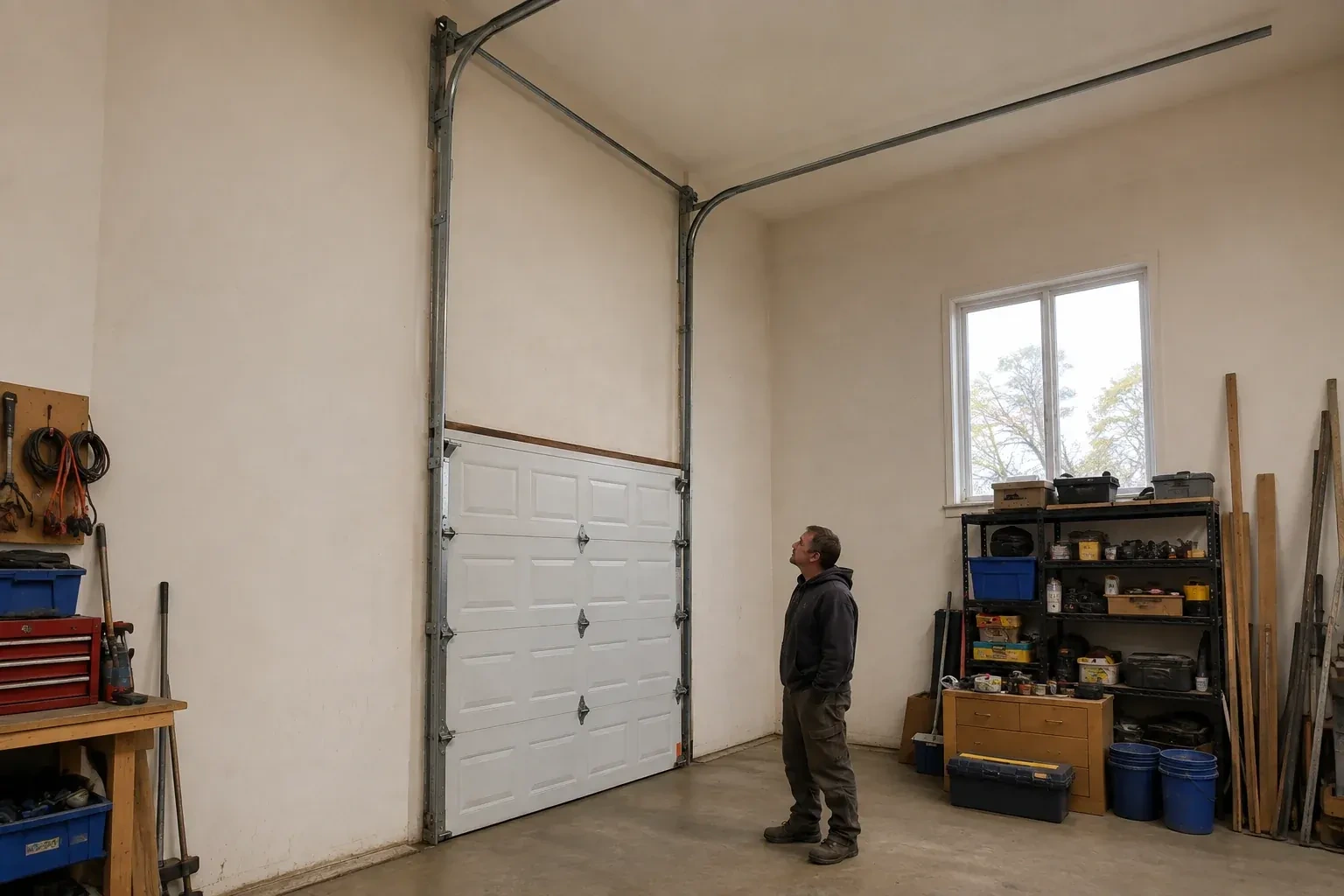
Storage racks were planned near the ceiling, but the existing tracks and centre-mounted opener divide the only practical zone.
In plain words
High lift sits between standard lift and full vertical lift. The door first travels upward along extended vertical tracks, then follows a curved transition and finishes horizontally. That makes it useful where the ceiling is higher than the opening but there is still room behind the door for horizontal panels. The available dimension is shaped by ceiling obstructions, spring and shaft space, track radius, door height and service access. A site assessment turns those limits into a practical clearance figure before parts are specified.
How the visit goesA garage project has reached the measurement stage, and overhead clearance is the deciding detail. The current springs, drums and tracks were built for standard lift, while the intended use calls for additional vertical travel.
High-Lift Garage Door Conversion
How the visit goes

Start with the space you want to use
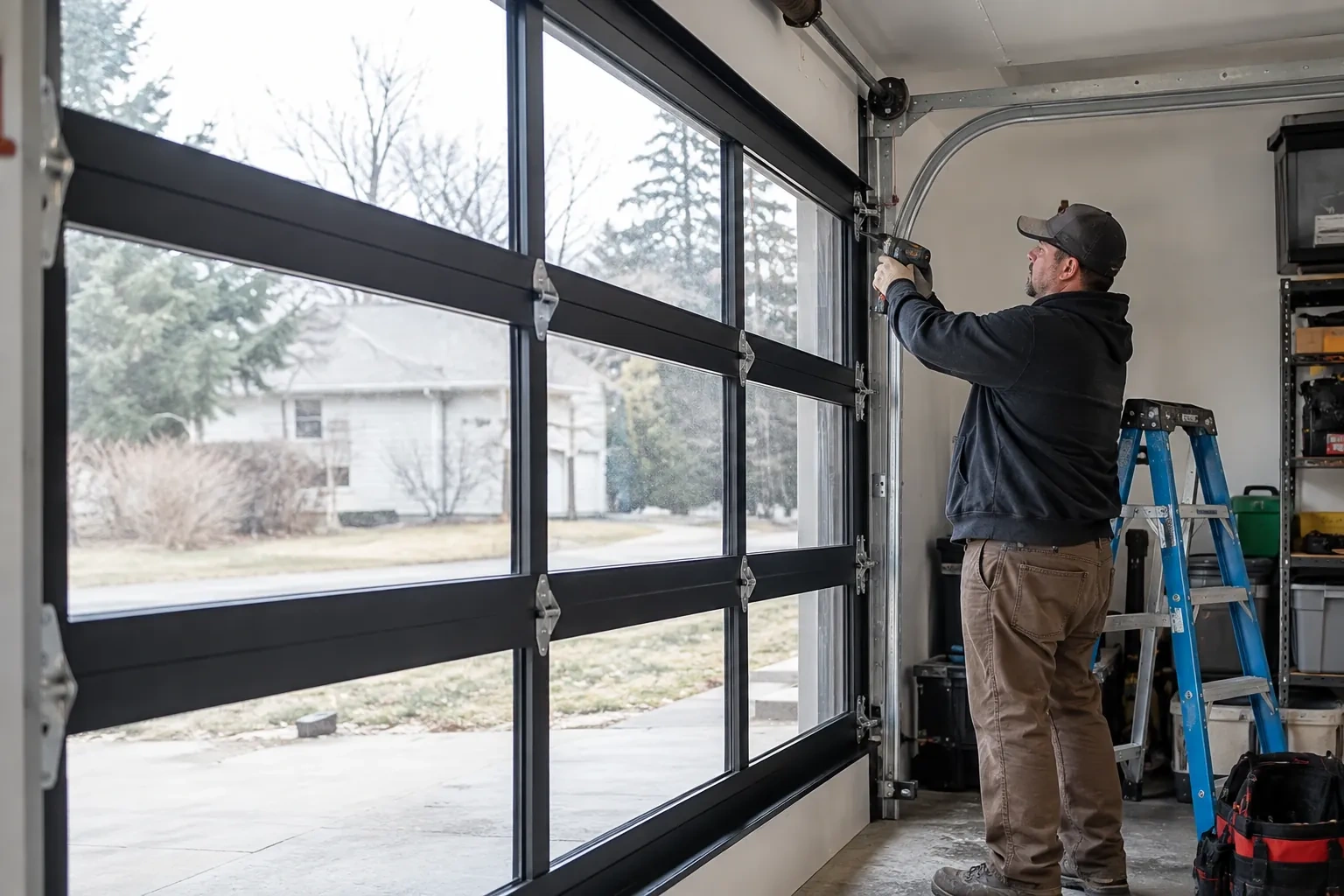
The first measurement is not the ceiling height; it is the clear zone the finished garage needs. For a vehicle lift, that includes the raised platform, the tallest expected vehicle and working clearance. For a shop, it may be lighting, storage or equipment. The technician marks that target, then compares it with the open door's present lowest point. This outcome-first approach reveals how much extra lift is useful and keeps the layout centred on a real purpose instead of simply placing track as high as the room appears to allow.
Secure the door before changing its geometry
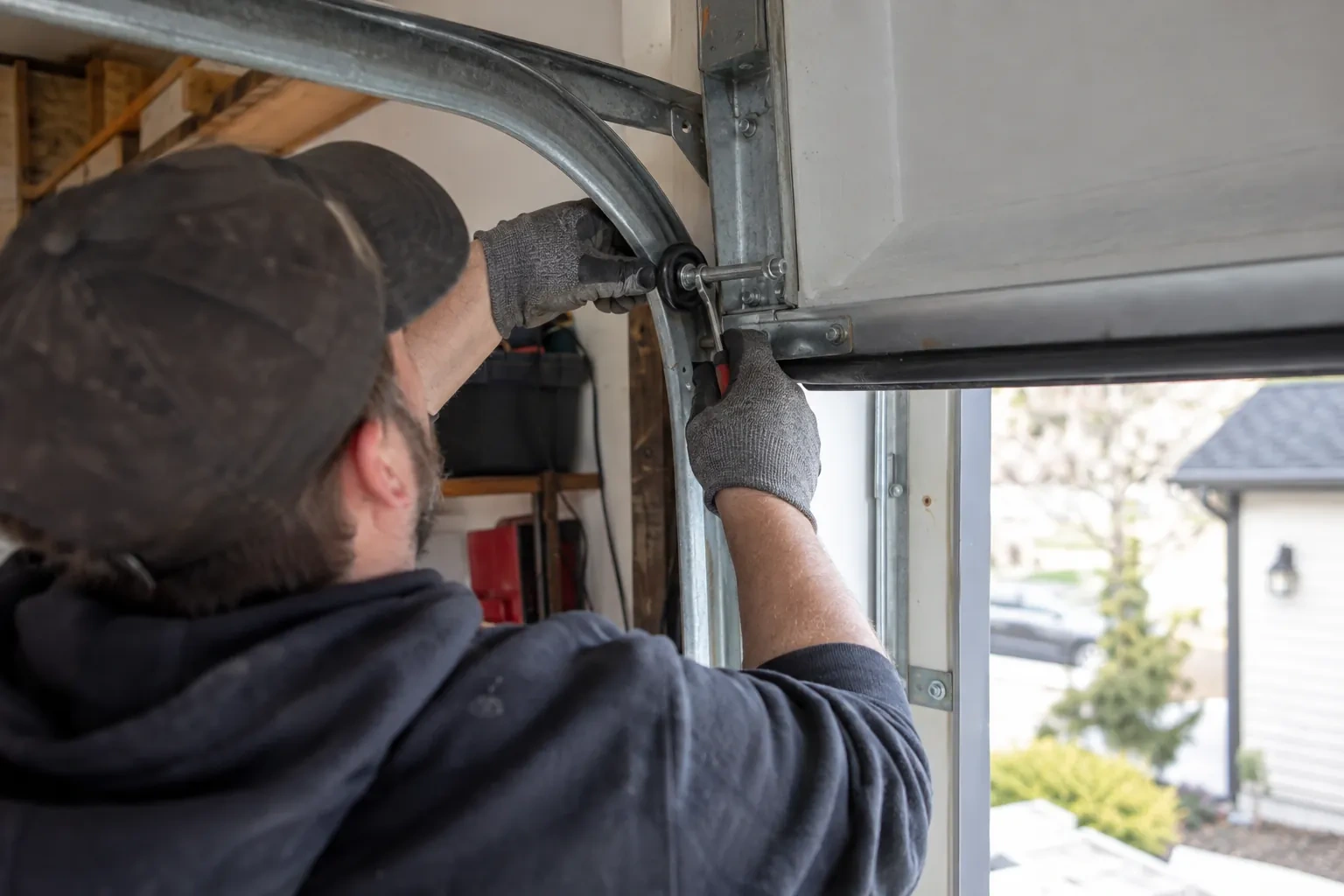
Conversion begins with the door closed, the work area organized and the panels firmly supported. The operator is disconnected from door movement, and the spring system is released through controlled professional procedures. Clamps and lifting equipment keep the door from shifting while loaded components are removed. This deliberate setup gives technicians stable access to tracks, cables, drums and shaft hardware. It also protects the reusable sections and creates a known starting condition for building the new path rather than dismantling parts around an unsupported door.
Seasonal observation without adjustment
Temperature and humidity shifts can change lubrication behaviour, door weight and how materials move, while road salt and moisture may reach lower hardware. From a safe position, look for smooth travel, an even bottom edge and cables that remain neatly seated. Listen for a new scrape or repeated contact at the transition. Cleaning accessible track surfaces and following the manufacturer-listed lubrication points supports regular care. Spring, cable, drum and bottom-bracket changes remain technician work because those components carry the counterbalance load.
High-Lift Garage Door Conversion
In the van
Horizontal track assemblies
Braced back hangs
Torsion shaft
Centre bearing support
Compatible operator hardware
High-Lift Garage Door Conversion
What affects the quote
Selected high-lift dimension
A modest rise and a layout using most of a tall wall require different track lengths, cable travel, drum geometry, spring design and access planning.
Track and support configuration
Extended verticals, transition curves, horizontal angles, back hangs, brackets and bracing vary with the building geometry and available attachment locations.
Ceiling and wall obstructions
Beams, ducts, pipes, lights, attic openings and sloped ceilings can change track routing, support placement and the amount of usable clearance delivered.
What to have ready
- Will the space serve a vehicle lift, storage, lighting or workshop equipment?
- Has weight been added through reinforcement, overlays or extra coatings?
- Are shelving, cabinets or ceiling racks inside the proposed work area?
High-Lift Garage Door Conversion: questions
QuestionsWhy is manual balance checked before powered operation?
The operator is intended to move a properly counterbalanced door, not compensate for an unsuitable spring or drum setup. Manual checks show how the door behaves without motor force and help technicians refine spring adjustment for the finished geometry. Once movement is controlled and consistent, powered commissioning can focus on limits, controls and protective devices rather than masking a mechanical issue.
Is structural work always included in the conversion?
Door hardware needs suitable attachment points, but framing changes are defined separately when required. The assessment records jambs, header, ceiling support and back-hang locations, then identifies any condition needing input from the responsible building professional or another trade. A clear proposal distinguishes door-system installation from structural, electrical and finish work so responsibilities are easy to coordinate.
Can I keep my existing garage door sections?
Sound sectional panels can often remain, subject to inspection. Their construction, reinforcement, hinges, rollers, top fixtures, weight and condition are reviewed for the new travel path. Reusing the door does not automatically mean reusing its track or counterbalance parts, since those components are selected for the changed geometry. The assessment identifies retained and replaced items separately.
Related services
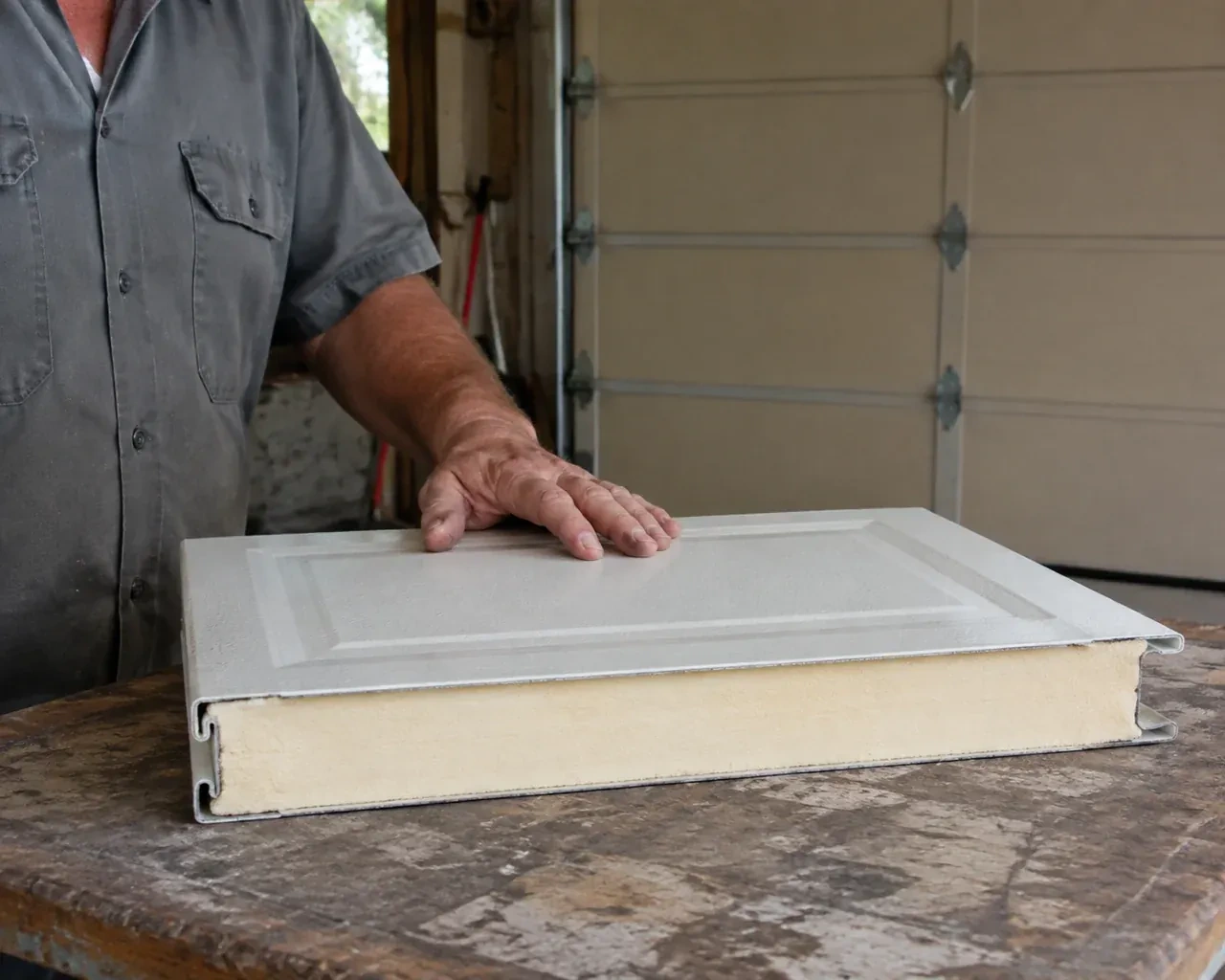
- Insulated Steel Garage Door InstallationThe opener strains as the heavy older door starts upward, and manual movement feels uneven.
- Wind-Rated Garage Door ReplacementStrong gusts make the centre of your wide garage door bow inward and the rollers chatter in their tracks.
- Carriage-House Garage Door InstallationTwo garage openings sit side by side, and small differences in window spacing or decorative hardware would be obvious.