New Doors · Beaumonde Heights
Commercial Sectional Door Repair in Beaumonde Heights
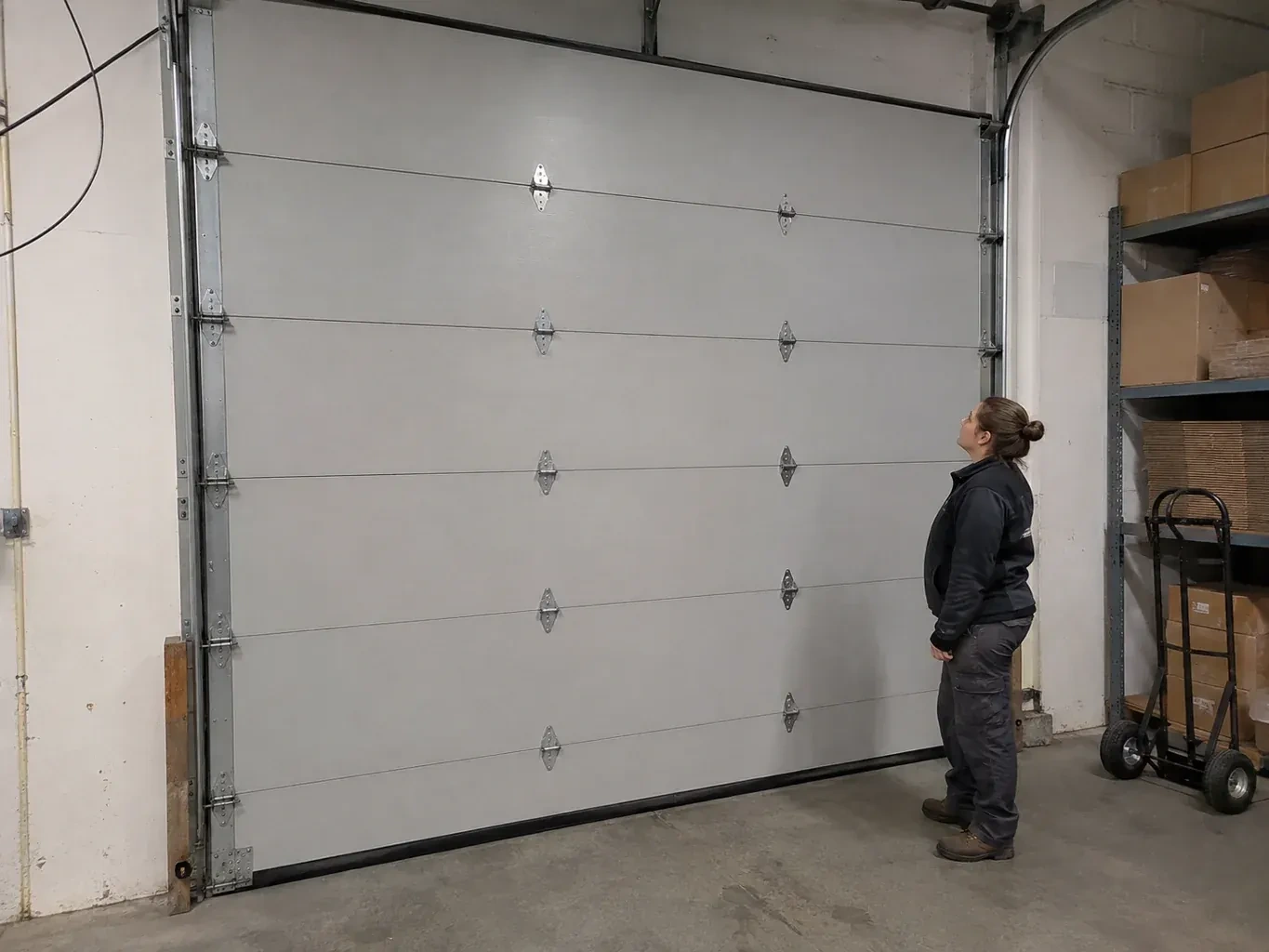
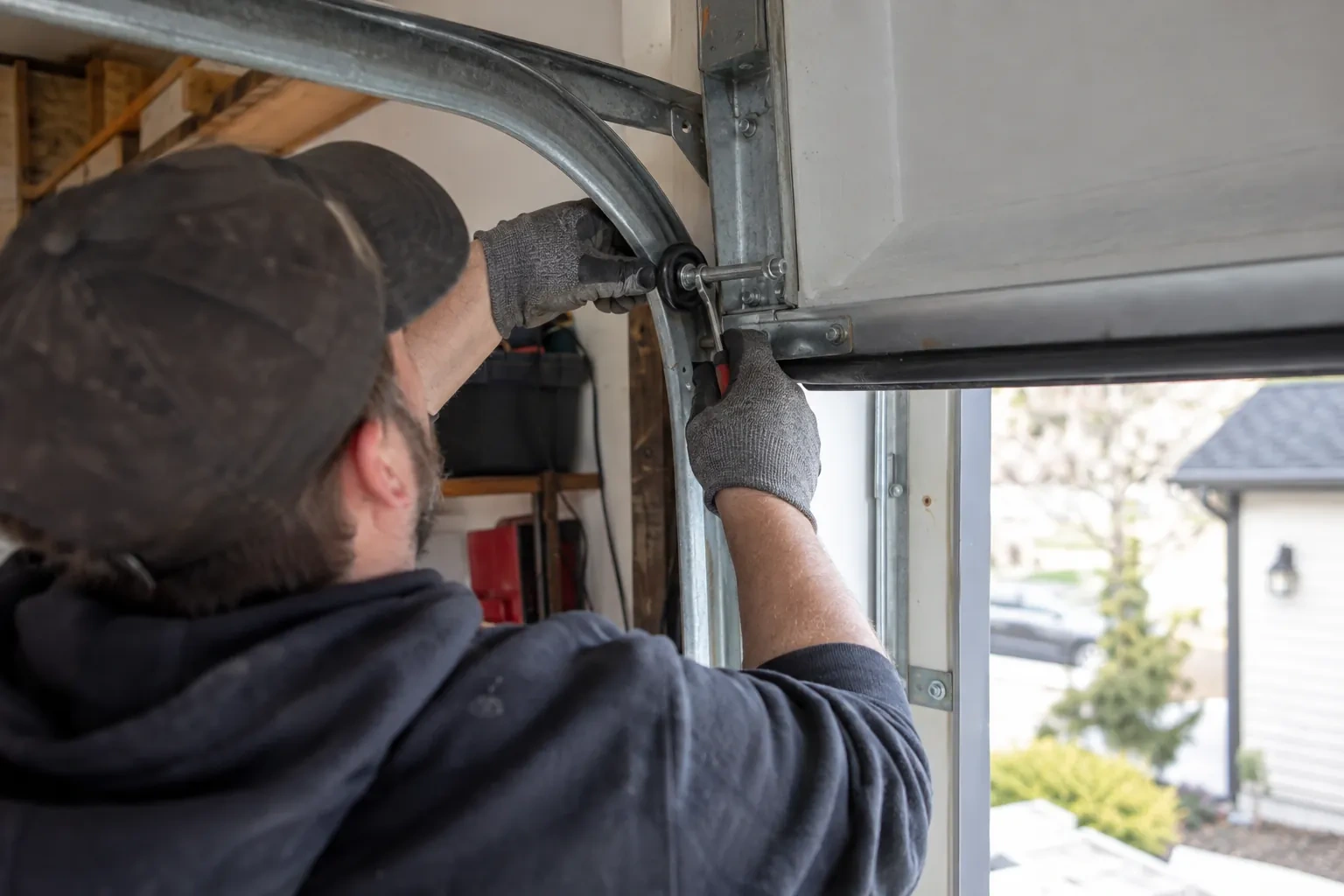
A high-lift door begins smoothly, then a cable loses tension as the top sections change direction.
In plain words
Unusual sound is useful diagnostic information on a commercial sectional door. A knock at the track curve suggests different issues from a steady bearing growl, a scraping section or operator-chain chatter. The technician listens during a controlled cycle, then inspects the hardware at the point where the sound appears. Worn rollers, loose hinges, dry bearings, displaced track and drive components can each be dealt with directly. The completed repair finishes with lubrication where specified and repeated observation of the previously noisy part of travel.
How the visit goesEach opening cycle brings a metallic knock followed by a shudder through the horizontal track. The sound grows near the curve, where a worn roller and loose hinge allow the section to shift under load.
Commercial Sectional Door Repair
How the visit goes
Testing protective controls
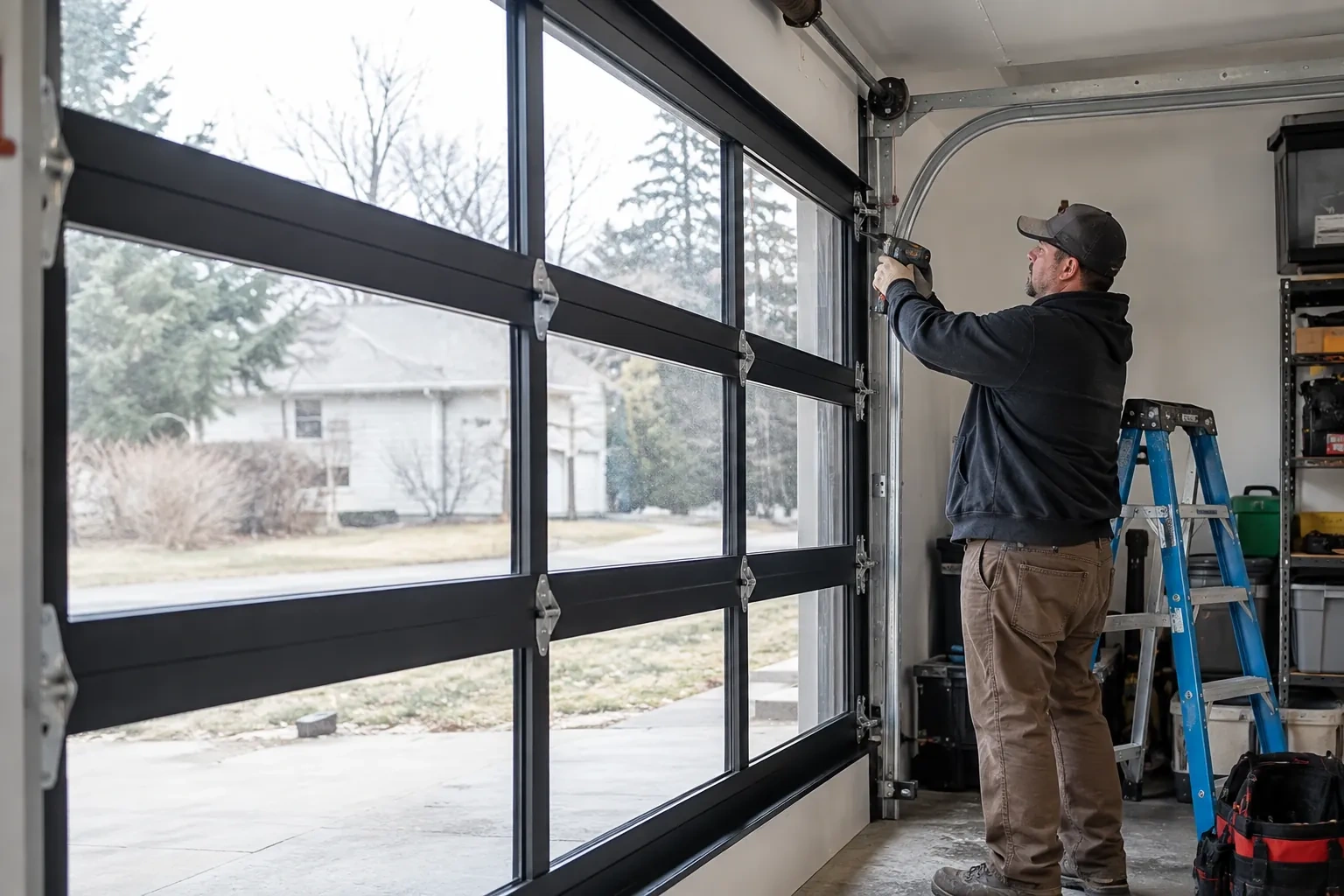
A reversing complaint begins with the travel area and installed protection devices. Photoelectric sensors are checked for alignment, secure mounting, clean lenses and intact wiring. A sensing edge is examined for distortion, connection faults and consistent response along the bottom of the door. The control station, stop circuit and operator indicators add context to the behaviour. Mechanical resistance is checked as well, since a binding door can affect powered movement. This combined assessment identifies whether service belongs at a sensor, its circuit, an operator setting or the moving door itself.
Re-establishing the weather seal
A damaged bottom seal is removed from its retainer, and the retainer is straightened or replaced when impact has distorted it. The new seal is sized for the door and floor condition, then fed evenly so it reaches both corners without stretching. Side and header weatherstrip are positioned for continuous contact while leaving the door free to move. If an uneven landing caused the original gap, cable level or track position is corrected first. The final fit is viewed from both sides with the door closed and checked again after cycling.
Operator settings matched to the door
Once limits and controls are set, the powered system should stop at a useful open height, close onto the floor without excessive pressure and respond consistently to its protective devices. Staff can keep photoelectric lenses clean, avoid moving their brackets and include the sensing edge in routine operational checks. The manual hoist or release instructions remain near the control station for designated personnel. Any later mechanical repair should be followed by another operator review, because door weight, balance and travel position all influence powered operation.
Commercial Sectional Door Repair
In the van
Numbered end hinges
Shafts and bearings
Torsion springs
Lift cables and drums
Bottom fixtures
Commercial Sectional Door Repair
What affects the quote
Track support condition
Loose back hangs, shifted brackets, damaged splices or weak anchors add alignment and support work beyond replacing the visibly bent length of track.
Weather-seal work
Bottom rubber alone is different from a bent retainer, uneven landing, damaged perimeter seal or drainage issue that also needs correction at the opening.
Counterbalance components involved
Spring count, shaft arrangement, drum type, cable dimensions, bearings and bottom fixtures determine which tensioned parts must be controlled, replaced and reset together.
What to have ready
- Are any cables visibly loose, crossed or frayed?
- Which numbered bay or opening needs repair?
- Which controls or sensors show unusual behaviour?
Commercial Sectional Door Repair: questions
QuestionsDoes a torn bottom seal always mean a seal-only repair?
Not always. The rubber may simply be worn, but a bent retainer, uneven floor, crooked door or impact-damaged bottom section can produce the same gap. The technician checks how the door lands before replacing material. Correcting level or retainer shape first allows the new seal to contact evenly without being stretched to compensate for another fault.
Can bent track be straightened or must it be replaced?
That depends on the location and degree of deformation. A minor change in an accessible straight section may be corrected while restoring spacing and support. A sharply creased rail, damaged curve, opened seam or track that can no longer hold the roller securely usually calls for a compatible replacement. Brackets, anchors and adjoining track are checked either way.
Can corrosion on lower hardware be repaired?
Surface condition and remaining material determine the scope. Light contamination may be cleaned during maintenance, while pitted cables, weakened brackets, seized rollers or compromised fasteners are replaced with compatible components. The source of moisture is considered too. Clearing drainage, renewing seals and removing accumulated salt help protect the repaired lower section and its hardware.
Related services
- Insulated Steel Garage Door InstallationThe opener strains as the heavy older door starts upward, and manual movement feels uneven.
- Wind-Rated Garage Door ReplacementStrong gusts make the centre of your wide garage door bow inward and the rollers chatter in their tracks.
- Carriage-House Garage Door InstallationTwo garage openings sit side by side, and small differences in window spacing or decorative hardware would be obvious.