Openers · Beaumonde Heights
Chain-Drive Opener Repair in Beaumonde Heights
The door opens about a third of the way and stops.
In plain words
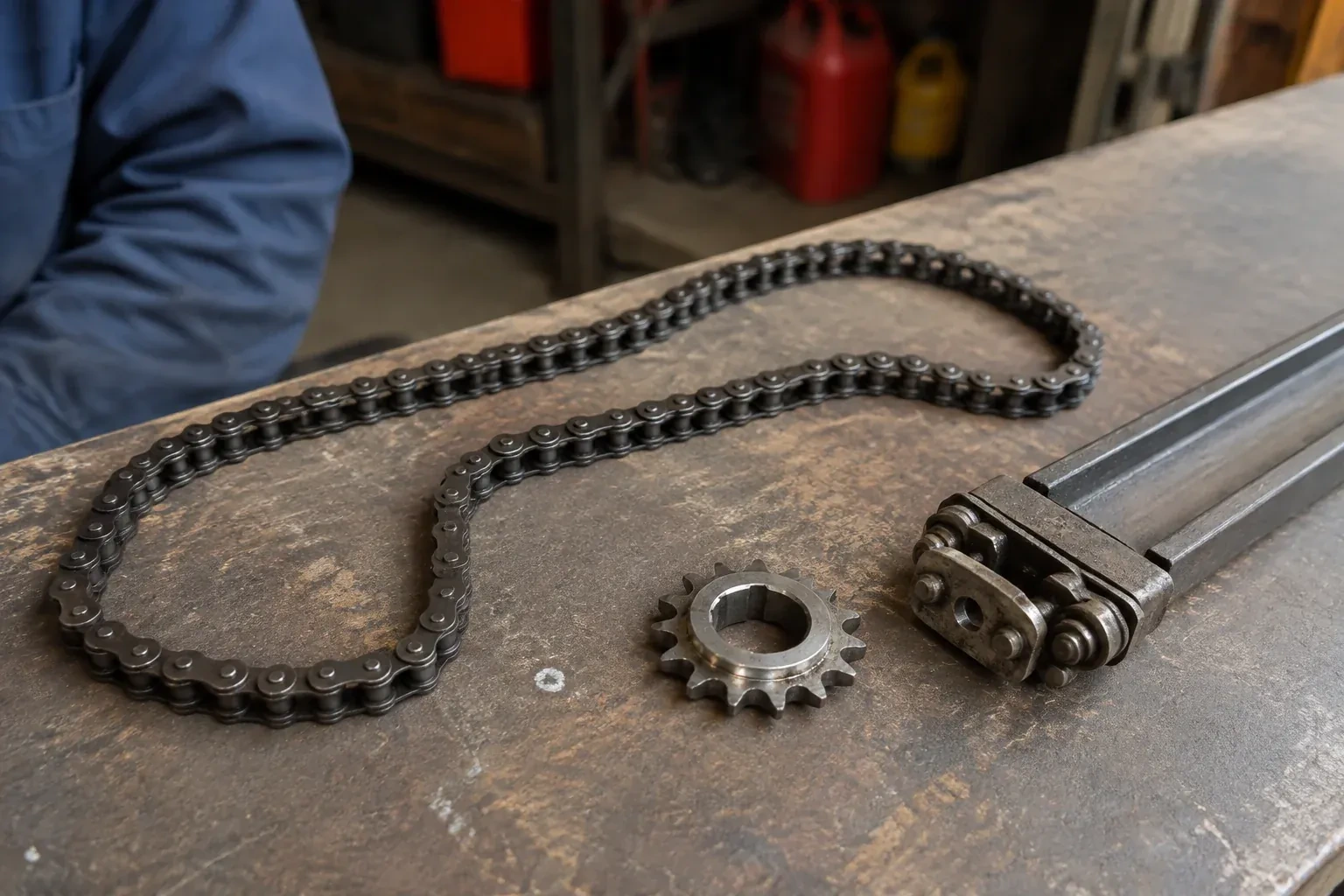
The most common chain-drive failure happens out of sight. Inside the motor head a plastic drive gear meshes with a steel worm on the motor shaft, and after years of lifting a door that has grown heavier its teeth wear away. The motor keeps running, but the sprocket above it turns weakly or not at all, and pale shavings collect under the cover. The repair fits a new gear and sprocket assembly made for that model, greases it properly, and then asks why the gear wore out. Usually the answer is a door that needs spring attention, and settling that is what protects the new gear.
How the visit goesThe door closes, touches the floor, then climbs straight back up as if it hit something. Nothing is in the way, the sensor lights are steady, and it has been doing this since the weather turned.
Chain-Drive Opener Repair
How the visit goes
Under the head cover
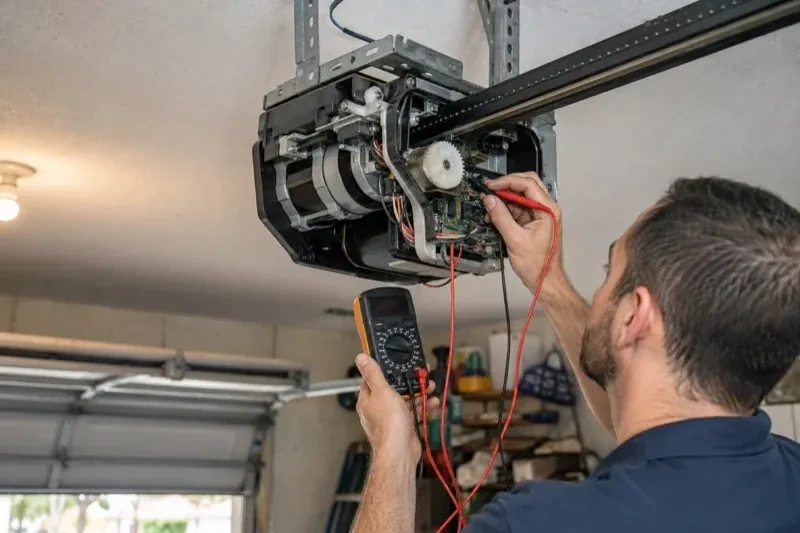
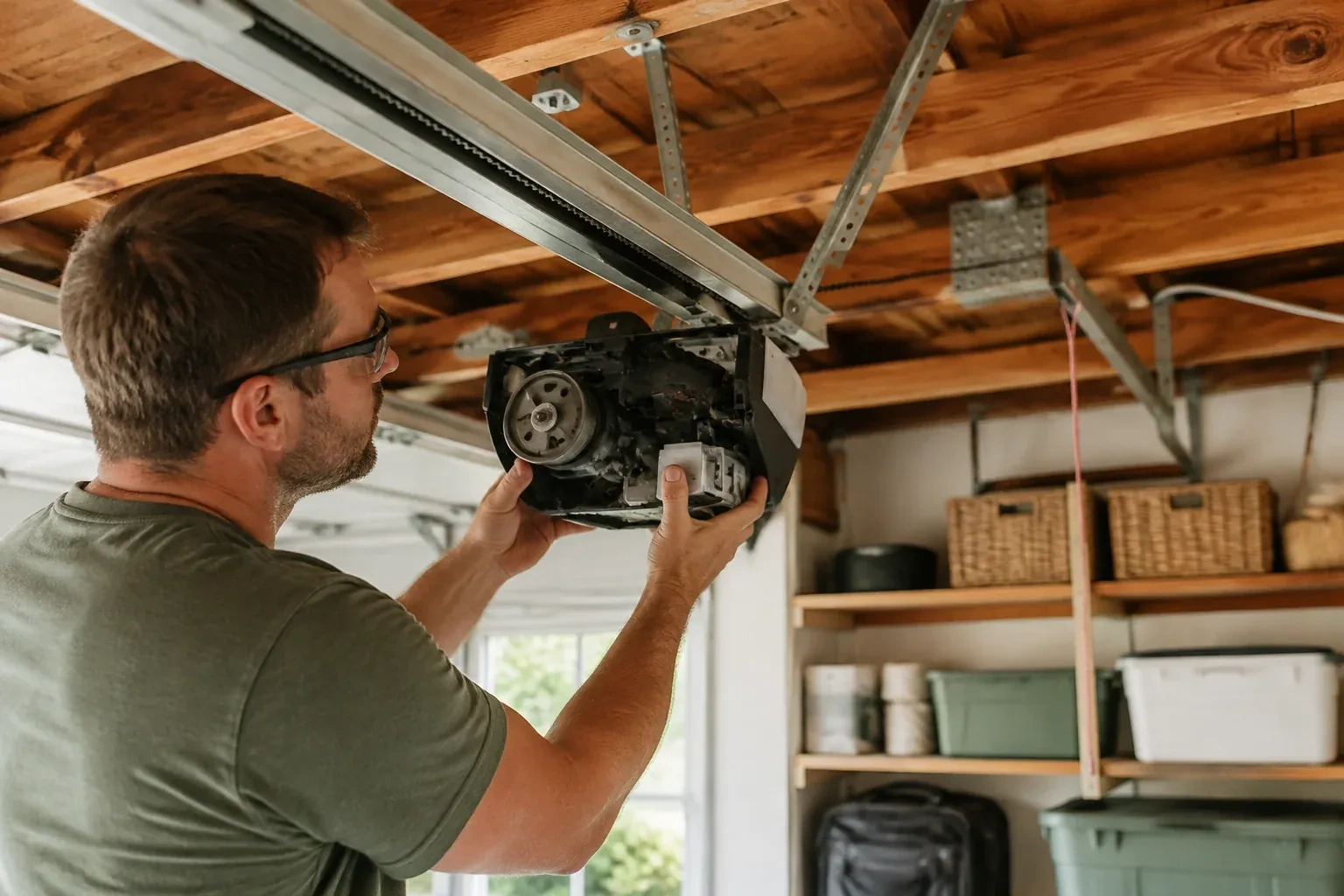
With the power off, the cover comes off the motor head so the drive can be seen. The technician looks for pale shavings around the drive gear, which mean the teeth are wearing away, and for a sprocket shaft that rocks when pushed, which points to worn bushings. The worm gear on the motor shaft is checked for scoring, the grease is judged for age and cold-thickening, and the capacitor is inspected for swelling. On newer heads the RPM sensor and its magnet are checked, since a faulty one makes the operator lose track of how far the door has moved. This look decides whether the job is a gear kit, a chain or an adjustment.
Freeing the trolley and renewing the carriage
A trolley lodged against the stop bolt is released rather than forced. The door is disconnected at the red handle, the outer tensioner nut is backed off several turns to slacken the chain, and the operator is run so the trolley travels away from the stop under its own drive. The limit is then pulled back so the trolley stops short of the bolt in future. Where the inner or outer trolley shows wear, a cracked latch or a bent release lever, the worn piece is replaced with the model's part and the release is checked to pick the door arm up on the first pass. The chain is re-tensioned to specification afterwards.
Getting the chain drive through the cold
In a detached or unheated garage the drive has been set up for winter: force adjusted so the door moves at low temperature without the operator being oversensitive, the rail greased, and the door hardware lubricated before frost. Two habits help. Keep the threshold clear of snow and slush so the bottom seal does not freeze to the slab, and if the door reverses on a bitter morning, free the seal rather than pressing the button repeatedly; the operator is doing what it should. Expect the chain to sound a touch different at minus twenty, and let the garage warm before deciding something is wrong.
Chain-Drive Opener Repair
In the van
Roller chain with master link
White lithium grease
Motor start capacitor
Rail hangers and header bracket
Trolley release lever
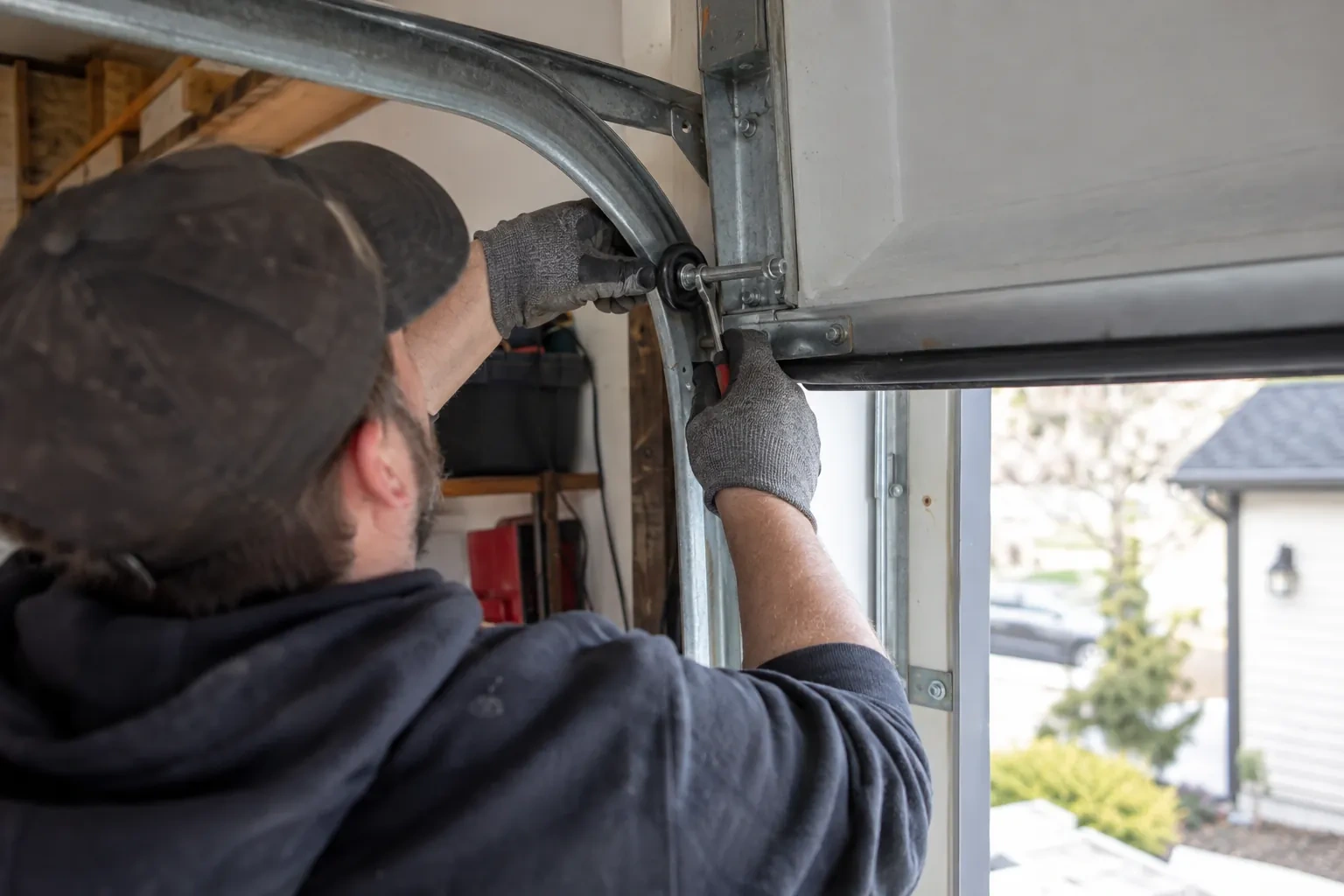
Chain-Drive Opener Repair
What affects the quote
Ceiling height and access
A head hung from a high or cathedral ceiling, or a rail boxed in by storage racks, a lift or ductwork, takes longer to reach and work on than one under a standard joist with a clear floor.
A detached or unheated garage
Cold-rated lubricant, a chain replaced rather than freed, and force set for low temperatures are choices made for a garage that sees winter, and they show in the parts and the time.
Electrical parts inside the head
A swollen capacitor, a failed RPM sensor or a damaged board found during the inspection are quoted separately from the mechanical drive, since each is a distinct component for that model.
What to have ready
- Does the motor run when you press the button, and does the door move at all?
- Is the garage attached and heated, or detached and unheated?
- Has anyone adjusted the limit or force screws, or run the opener with the chain off?
Chain-Drive Opener Repair: questions
QuestionsWhy does the door open only partway and stop?
Three causes account for most cases. The up travel limit has drifted short and needs turning out. The door has become heavy or stiff somewhere in its travel, so the operator senses resistance and stops, which points to the springs, rollers or track. Or the chain has slipped out of phase with the motor, in which case the limit screws have no effect and the chain must be re-set on the sprocket with the trolley at the closed position.
What is the trolley, and why would it get stuck?
The trolley is the carriage that rides along the rail, pulled by the chain, with the door arm hooked to it. It gets stuck when the travel limits creep and it is driven onto the stop bolt at the head end or the stop tab at the door end, where the motor hums but nothing moves. The technician slackens the chain, runs the trolley off the stop under power, and pulls the limit back so it stops short in future.
Is a chain drive supposed to be this noisy?
A chain drive has a steady mechanical sound that a belt drive lacks, and that much is normal. What is not normal is change: a slap along the rail from a loose chain, a clack at one spot from a worn sprocket tooth, grinding from the head as a gear wears, or a rattle from hangers or a header bracket that have loosened. Each of those has a fix, and a repaired chain drive should sound the way it did when it was new.
Related services
- Belt-Drive Opener RepairThe belt looks fine from a distance, but up close the rubber has cracked across the back in dozens of places and, in one spot, you can see the steel cords showing through.
- Garage Door Opener ReplacementThe bedroom above the garage shakes every morning at six when the chain drive fires up.
- Photo-Eye Sensor Alignment or ReplacementThere are no sensors at the floor at all, or a previous owner has wired the pair together up beside the motor so the beam never crosses the doorway.